

























































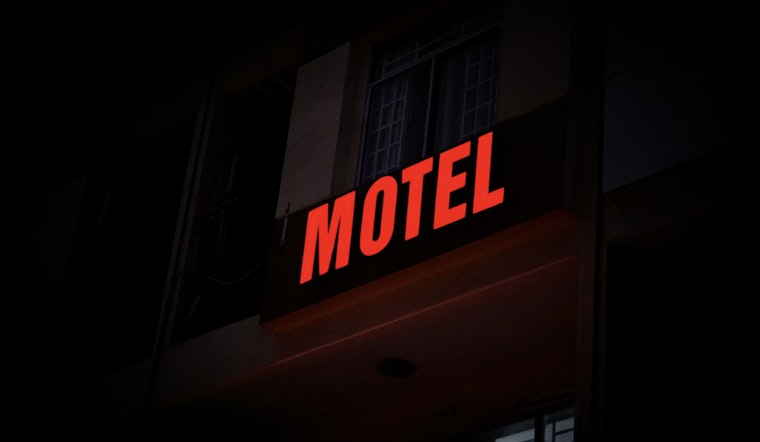
Miami-Dade appears to have a far larger homelessness crisis than the official nightly tally lets on. A new analysis pegs about 66,000 people as living in doubled-up, motel, or otherwise unstable situations, a crowd big enough to fill Hard Rock Stadium. The county’s point-in-time count, which captures people in shelters or sleeping outside on a single night, only reaches a few thousand, leaving a wide gap between what is counted and what residents actually live through.
A detailed investigation by the Miami Herald digs into that discrepancy, using county, state, and school-district records along with an analysis by researcher Molly Richard. The work identifies roughly 66,000 Miami-Dade residents as “hidden homeless” and uses Florida Department of Education data to show that about 11,000 of them are school-age children. The Herald profiles families paying thousands of dollars to stay afloat in extended-stay hotel rooms, including one couple who told reporters they spent about $17,000 over eight months for a studio, and documents serious habitability issues in some of the lower-cost motels.
What Counts As Homelessness?
The federal answer depends on who is asking. Under the U.S. Department of Education’s McKinney-Vento guidance, students are considered homeless if they are “lacking a fixed, regular, and adequate nighttime residence,” which includes families doubled up with relatives or living in motels. That definition tends to drive higher school-based counts and flags more kids in unstable housing for services, as outlined by the U.S. Department of Education.
Housing officials rely on a stricter standard. HUD’s rules focus eligibility and point-in-time counts on people staying in shelters or in “places not meant for human habitation,” such as cars, sidewalks, or encampments. The formal definition appears at 24 CFR §91.5, published online by Cornell Law School, and it yields far smaller nightly tallies than school or service-system data.
Why Official Counts Miss So Many
HUD requires communities to conduct a point-in-time count on a single night, which means anyone who bounces between couches, short motel stays, cars, or brief stints in temporary housing is easy to miss. As Governing reported, Miami-Dade’s January headcount logged hundreds of people sleeping outside and a few thousand more in emergency shelters, numbers that look modest next to the much larger estimates that emerge from school and service data.
Local officials and service providers say the mismatch has several roots: outreach teams cannot reach everyone on a single night, shelter beds are limited, and agencies apply different definitions and methods. The Miami-Dade County Homeless Trust has also pointed to inventory limits and outreach capacity as it explains how local totals are assembled and what the county is trying to do about them.
Hotels, Vouchers And Invisible Safety Nets
For many residents priced out of traditional rentals, extended-stay hotels function as de facto apartments, even if the room key says otherwise. That setup creates a shadow housing system that is precarious and largely invisible in formal counts. The Herald’s reporting describes crowded rooms and substandard conditions at some properties and notes that major investors have surged into the extended-stay market. Private equity firms Blackstone and Starwood Capital paid about $6 billion to acquire Extended Stay America, according to CNBC, a deal that illustrates how this slice of the lodging sector has become big business.
Those market forces leave many low-income families stuck in unstable rentals that do not show up on nightly street counts yet fall far short of a permanent home. The dynamic, documented in the Miami Herald investigation and national investment coverage, turns motels into an improvised safety net that was never designed to be long-term housing.
Policy Choices That Matter
The Herald’s reporting spotlights two pressure points in local policy: time-limited housing vouchers and a chronic shortage of assistance. Many programs give households a relatively short window, often around 60 days, to find an apartment before a voucher expires. On top of that, the story notes that only about one-quarter of households that qualify for vouchers actually receive them.
Advocates and the Homeless Trust point to a familiar but difficult set of fixes. Expanding the supply of vouchers, giving families longer to search for housing, and putting money into permanently affordable homes are among the tools they say are needed to bring the numbers closer to reality. For a deeper look at how those ideas show up on paper, the Miami-Dade County Homeless Trust publishes details about shelter beds, outreach, and the county’s community homeless plan.
If the 66,000 estimate is even close to accurate, it implies that demand for help in Miami-Dade is far bigger than a single-night headcount suggests. Treating motels, doubled-up households, and other unstable arrangements as front-line sites for outreach and services, rather than as an afterthought, will be key if local officials want their dashboards to match what families, school staff, and service providers are seeing every day.





