

























































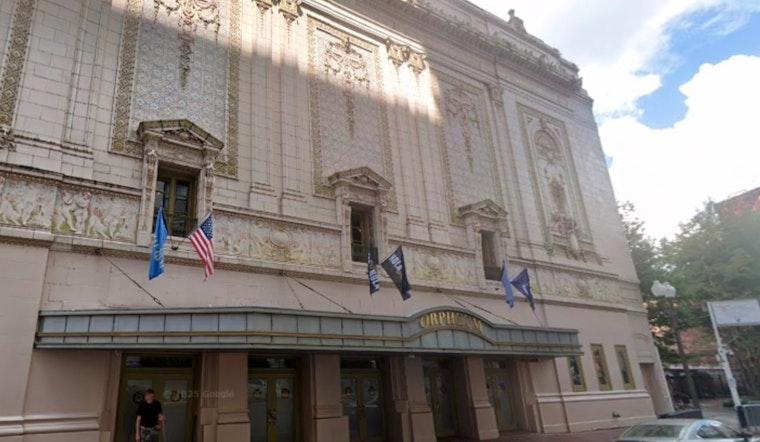
The Krewe of Prophets of Persia marked a century of private Carnival balls with a 100th anniversary bash at the Orpheum Theater earlier this month. The invitation-only affair doubled down on what the krewe is known for: theatrical tableaux, formal courts and costumes that look ready for a museum vitrine. For longtime members, the night was a reminder that some corners of New Orleans Carnival culture are still guarded by a small circle of insiders.
A century of private balls
Founded in 1926 and staging its first formal ball in 1927, the Prophets built a reputation for elaborate, theme-driven pageantry that most New Orleanians never witness firsthand. For its 100th anniversary, the krewe revived a coronation tableau modeled on Napoleon and Josephine, and the Orpheum event capped a full week of centenary celebrations. As NOLA has reported, the Prophets keep the identity of their captain and many internal details tightly under wraps, a tradition that fits the krewe’s preference for closed-door spectacle.
Costumes, crest and the museum record
Much of the krewe’s visual story now lives in climate-controlled storage. The Louisiana State Museum holds thousands of Carnival artifacts that help trace early design choices for groups like the Prophets. Curator Wayne Phillips has worked to catalogue sketches and couture that map the krewe’s evolving tastes, and museum holdings link designers such as Louis Andrews Fischer to the Prophets’ early imagery. The collection materials describe the depth of the museum’s Carnival archive, and historians like Henri Schindler have written about Fischer’s influence on that visual language.
A secretive captain and a modern push
The krewe still prefers mystery to publicity. Its captain is a member of roughly 30 years whose name is not public, and who, according to NOLA, took the helm in February 2020, then pushed to make the centennial celebration bigger once the pandemic years had passed. That effort shaped the weekend’s program and pulled roughly 260 current members into the festivities. The Orpheum Theater hosted the ball, putting a century of private pageantry on one of the city’s best-known stages while keeping the guest list, as usual, very controlled.
Queens, families and continuity
The centennial also brought several past queens and their courts back into the same spotlight, with members gathering again the next day for a private luncheon at a St. Charles Avenue home. That kind of continuity, younger members standing alongside people with family ties to mid twentieth century Carnival courts, shows how the krewe weaves civic memory into private ritual. Local obituaries and society pages, including contemporary memorial notices, have documented decades of court appearances and the survival of ball costumes that later landed in museum collections (see a representative memorial notice for the flavor of that record).
Why this matters now
With the centennial in the books, the Prophets of Persia milestone is doing what big anniversaries often do. It pulls artifacts out of storage, prompts fresh cataloguing and sparks new conversations about who gets to preserve and interpret Carnival’s past. Museums and local outlets have been spotlighting designers, backdrops and costume archives in recent exhibits, and that work helps explain why a closed-door ball can matter far beyond the ballroom. For readers interested in how curators are unpacking Carnival design and history, see coverage of a recent exhibit at the Presbytère, which takes a similar deep dive into the visuals behind the season’s most exclusive stages.



