

























































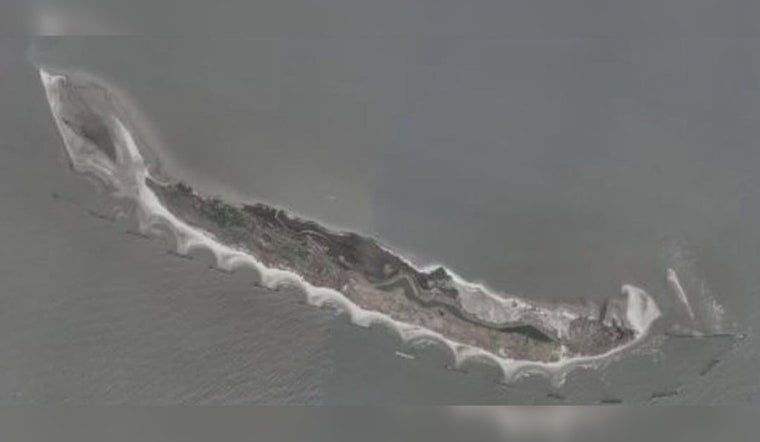
Raccoon Island is already doing two jobs at once: giving Louisiana’s coastal birds a place to raise chicks and taking some of the punch out of hurricane-driven water. Now state and federal officials want to spend roughly $145 million to make the Terrebonne Parish barrier island bigger, tougher and harder to wash away.
At issue is a draft restoration plan from the Louisiana Trustee Implementation Group. The Coastal Protection and Restoration Authority lists the preferred Raccoon Island alternative at an estimated $145.5 million, with the work tied to Deepwater Horizon settlement funds.
What The Restoration Would Add
The preferred design would dredge about 2.9 million cubic yards of sand from an offshore borrow area to restore up to 410 acres of beach, dune and marsh habitat. The National Park Service project record says the work would maintain existing Gulf-side breakwaters, add four bayside breakwaters and build nine living shoreline structures.
Those 13 bayside features are intended to do more than sit there looking sturdy. The design calls for lower-elevation living shorelines with oyster material on the marsh side, allowing oyster growth to help stabilize the island while slowing waves and storm surge.
Raccoon Island is also one of Louisiana’s most important waterbird nesting areas, according to Louisiana wildlife officials. The island provides nesting, feeding and resting habitat for coastal birds in a setting with few natural predators, making the restoration as much about habitat as it is about sand and rock.
A Small Island With A Big Protective Job
The island currently covers about 162 acres, according to New Orleans CityBusiness, but its barrier-island position helps protect roughly 200,000 coastal residents in Terrebonne and Lafourche parishes. When hurricanes push water inland, the island absorbs and reduces part of that surge before it reaches communities farther north.
The project is being paid for through the same federal restoration framework created after the 2010 oil spill. Gulf Spill Restoration says the plan is intended to address injuries to wetlands, coastal and nearshore habitats caused by Deepwater Horizon while restoring the island’s ecological and protective functions.
The price tag has already been moving upward. Local reporting said the earlier estimate was $102.9 million, while officials attributed the higher projected cost to increased fuel prices, a particularly meaningful expense for a project built around dredging and hauling millions of cubic yards of sand.
For now, the island rescue remains a proposal rather than a construction award. The public-comment period closed June 17, and the state restoration authority says the preferred alternative still must move through the trustee process before construction can begin.




