

























































Johnston County officials pulled back the curtain on just how fast things are changing this week, rolling out a fresh set of numbers on population, home values and education levels that will shape decisions on schools, taxes and jobs. The one-page “Johnston by the numbers” briefing, shared Tuesday on the county’s official Facebook feed, was presented to commissioners as a kind of quick reality check before the next round of big-budget choices.
County's "Johnston by the numbers" slides
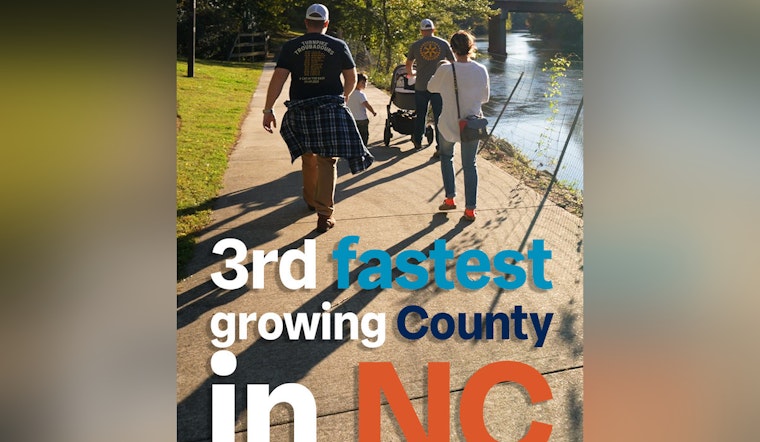
The county’s snapshot leans heavily on headline figures meant to show a community in full-on growth mode. The post highlights a median age of 37.9, a median household income of $83,384, and a claim that property values have climbed 77%. It also notes Johnston is now the state’s third-fastest-growing county and breaks out age groups to show who is actually driving that growth. These figures come from the county’s own graphics, according to Johnston County Government.
Educational attainment is another point county leaders clearly want on the record. The post shows roughly 41.6% of adults with an associate degree or higher, and points out that this share tracks closely with federal estimates of about 41.7% for the county, as reported in the Federal Reserve Bank of St. Louis’ FRED database.
How those figures compare with Census data
Federal data paint essentially the same big-picture story, even if the exact numbers do not line up perfectly. The U.S. Census Bureau’s QuickFacts estimates Johnston County’s population at 249,794 as of July 1, 2024, and shows a median household income of $79,838 for 2019–2023, with a median owner-occupied home value of $305,600 for 2020–2024. Those figures point in the same direction the county is emphasizing: more people, higher incomes and pricier homes, according to U.S. Census Bureau QuickFacts.
The small gaps between county graphics and federal tables mostly come down to timing and definitions. Different data vintages, survey windows and ways of slicing the numbers explain why the charts are not identical, even though the underlying trends match up.
Why the timing matters for taxes, schools and jobs
The new demographic slide deck lands right in the middle of some politically touchy conversations. County leaders are still working through the fallout from a full property reappraisal and upcoming decisions on tax rates, a process covered in January 2025 in reporting on the county’s property reappraisal and tax talks.
Growth is not just a line on a chart, it is a pressure test for the budget. Rapidly rising home values can expand the tax base at the same time they spark pushback from homeowners. Population growth feeds school enrollments and infrastructure needs. And then there is the commute problem. About 77% of Johnston residents leave the county for work, according to WRAL, a statistic local economic-development officials have pointed to while arguing for more industrial and commercial space inside county lines.
All of that is the backdrop for the slide deck that showed up in the commissioners’ meeting packets this week. The numbers are less about bragging rights and more about framing the tough choices on tax policy, school construction and land use that are now on the table.
Training to meet employer demand
County leaders are not just counting rooftops, they are also trying to line up workers for the employers they hope to attract. One key piece: Johnston Community College’s Advanced Manufacturing Training Facility in Four Oaks, which the college’s campus map lists at 546 Boyette Road. The facility is designed to build the kind of hands-on skills that local manufacturers say they need, according to Johnston Community College.
The training center and related programs are central to the county’s bid to make sure that when new industrial projects land, local residents are actually in line for those paychecks instead of watching the jobs go elsewhere.
For now, commissioners and staff are expected to treat the updated demographic slides as one more tool, alongside enrollment projections, budget forecasts and development maps, as they shape policy in the months ahead. The county’s original post and full slide deck remain available on its social feed for anyone who wants to study the graphics or dig into the raw numbers for themselves.





