

























































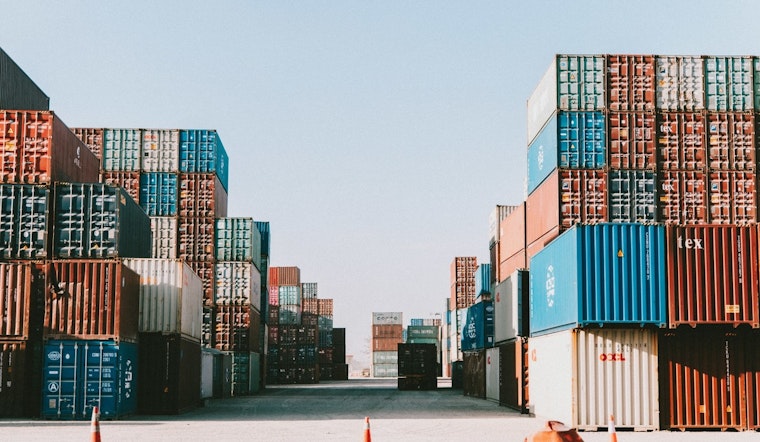
State Sen. Rachel Ventura is taking direct aim at the warehouse boom that has remade Joliet and its neighbors, filing sweeping legislation that would force the biggest warehouse and logistics operations in Illinois to cut emissions, tighten up permitting, and keep a closer eye on the air around nearby homes and schools. Her Warehouse Pollution Reduction Act is designed to blunt the diesel truck traffic and related pollution that have become a way of life along the warehouse belt ringing Joliet and surrounding towns.
The proposal, filed as SB3732, would launch a qualifying-warehouse review program and require construction permits for new or expanded facilities that are built with “zero-emission readiness” and specific buffer zones, according to the full text on the Illinois General Assembly. The bill layers in reporting and recordkeeping rules, annual emissions-reduction targets, and a points-based mitigation system that gives operators credit for air-quality improvements.
Ventura, whose district covers the inland-port corridor anchored by Joliet and Elwood, said the measure borrows heavily from rules used in Long Beach and is meant to give residents a concrete way to manage runaway logistics growth. “We’re at a time now that I think a lot of people want warehouses to clean up the messes they’ve created,” she told local reporters, according to Shaw Local. Her office says the plan would also hand the Illinois Environmental Protection Agency clearer authority to levy fines when companies blow past the rules.
Key provisions in the bill
The legislation would require qualifying warehouses to hit net-zero greenhouse gas emissions by 2050, using tools like clean-energy truck fleets and on-site solar power, according to the Illinois General Assembly. It also calls for truck bays to sit at least 1,000 feet from schools, parks and other “sensitive receptors,” a buffer meant to keep the heaviest pollution away from kids and daily neighborhood life.
Existing facilities would not skate by. The bill would require air monitoring at qualifying warehouses already in operation, create a public registry of those sites and set mitigation fees that would funnel money into local air-quality projects. The same text outlines how operators could earn mitigation points for cleaner practices, then use those points to meet their regulatory obligations.
Local context and health concerns
Joliet’s logistics corridor is already dominated by the sprawling CenterPoint Intermodal Center and a steady wave of additional warehouses that residents and advocates say have brought an almost constant stream of semis and a noticeable hit to local air quality. Reporting has shown that warehouse activity in Illinois exposes roughly 2 million people to elevated pollution and that residents have tallied strikingly high truck counts at single intersections, according to the Chicago Sun-Times.
Long Beach model and industry reaction
Ventura told reporters her bill is modeled on Long Beach’s WAIRE-style rules, which require large warehouse operators to rack up mitigation “points” by installing solar panels, electric-vehicle chargers and zero-emission trucks and equipment. In California, that system has generated hundreds of compliance notices as regulators have tightened enforcement, a process detailed by the Los Angeles Times. Ventura has acknowledged that similar requirements in Illinois are likely to draw pushback from business interests, according to Shaw Local.
What happens next
SB3732 was filed in early February and referred to the Senate Assignments Committee, where it will need a hearing and a committee vote before it can move forward. Legislative trackers currently show the bill as newly introduced and awaiting a more permanent committee home, with both supporters and industry groups closely watching for the next procedural step, according to LegiScan.
Supporters frame the proposal as a long-overdue statewide response to a problem that has landed hardest on Joliet and nearby communities, while critics warn it could slow down development and drive up costs for logistics operators. As lawmakers turn to committee hearings, the fight over the Warehouse Pollution Reduction Act is expected to revolve around a familiar Illinois question: how to balance jobs and growth with the health of the people living in the warehouses’ shadow.



