

























































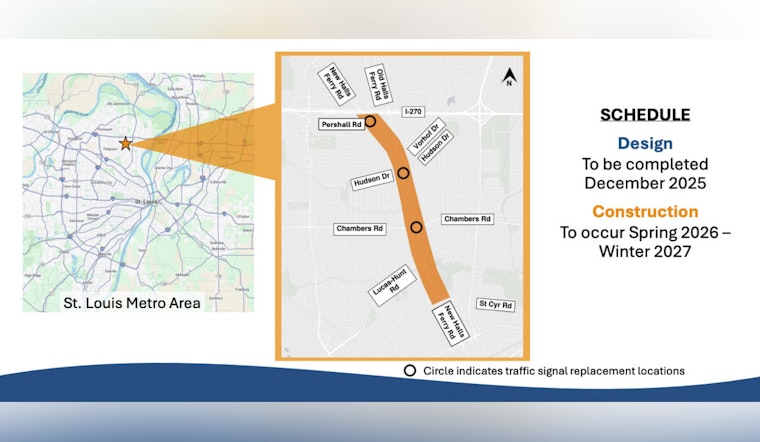
On Wednesday night, Missouri Department of Transportation staff and consultants lined the halls of the James J. Eagan Community Center in Florissant with maps and display boards, asking residents what it will take to make New Halls Ferry Road safer. The open-house event zeroed in on a 2.5-mile stretch between Lindbergh Boulevard and I-270, with a clear mission: slow drivers down, make crossings less nerve-racking, and finally plug the gaps where sidewalks simply disappear.
Danger on a busy corridor
MoDOT’s technical data paint a pretty stark picture of this corridor. The agency reports a crash rate far above the statewide average, with recorded speeds hitting 70 mph and a notable number of fatal and serious-injury collisions in recent years. According to MoDOT's presentation boards, speeding is a central culprit, and engineers have flagged multiple crash hotspots along New Halls Ferry Road.
Design options on the table
The concepts on display ranged from routine fixes to more dramatic traffic-calming moves. Residents saw proposals for new pavement and curb work alongside operational changes meant to slow cars and shorten pedestrian crossings, including updated signals and stretches of newly built sidewalk. The open-house setup, which let neighbors drop in to view conceptual designs and talk with project staff, was designed to collect feedback without the formality of a single presentation.
What MoDOT says will help
On its display materials, the agency spells out its core objective in plain language: “The purpose of this project is to improve pedestrian safety and enhance ADA accessibility.” Those same boards outline lane reductions, raised medians, bus pull-outs and reconstructed signals at several intersections along the corridor. The materials explain that trimming the number of travel lanes and adding median islands can help calm speeds, cut down on right-angle crashes and reduce how far people on foot have to cross at one time, according to MoDOT's presentation boards.
Timeline and the price tag
MoDOT’s displays show design work wrapping up with construction able to start as early as spring 2026, although both the schedule and rough budget have shifted as plans move closer to a construction contract. KMOV / First Alert 4 reported this week that officials are now talking about roughly a $7 million construction estimate and pushing major work back to around March 2027.
Neighbors aren't all convinced
Some locals who have sat through multiple planning sessions remain unconvinced that design tweaks alone will solve the problem if drivers keep treating the corridor like a racetrack. They say better enforcement and brighter lighting will need to join the tool kit. “That is accident alley,” one business owner told KMOV / First Alert 4 at an earlier meeting, adding that medians and better lighting are needed, not just paint and signs.
How to weigh in
MoDOT says the display boards and other project materials are available online and that staff will keep collecting public input while right-of-way work and detailed design continue. Agency contacts listed for the Route AC corridor include Tabitha Locke and project manager Daniel Savageau, and officials say community feedback will help shape the final design before major construction contracts are awarded.





