

























































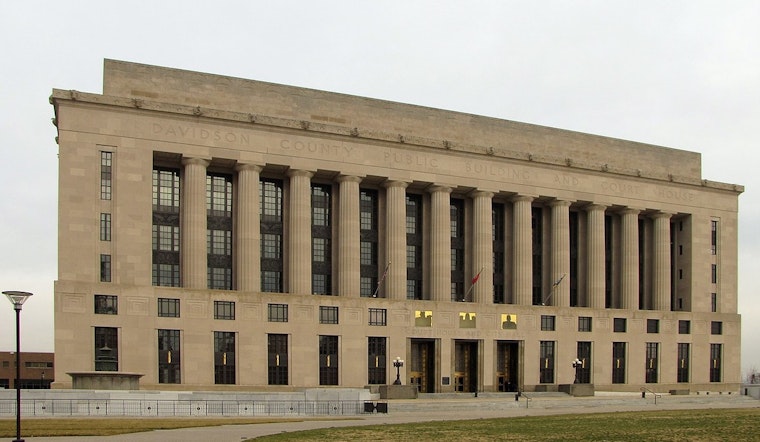
Mayor Freddie O’Connell is keeping a close eye on the Tennessee Supreme Court after justices heard oral arguments Thursday in two high-stakes cases that could rewrite how Nashville runs its own house: one targeting the size of the Metro Council, the other aiming at who controls appointments to the Metro Nashville Airport Authority board.
The hearings are the latest chapter in a years-long tug-of-war between state lawmakers and Metro over home-rule authority and who gets to call the shots on local institutions like Nashville International Airport, better known as BNA. For O’Connell, the fight is not abstract. It is about how residents are represented at City Hall and who steers one of the region’s biggest economic engines.
In an interview with WKRN News 2, O’Connell said he is following the proceedings while leaving the courtroom strategy to Metro Legal. His own focus, he said, is on keeping city services steady and airport operations running smoothly regardless of what happens in court. He declined to guess how the justices might rule and emphasized that Metro’s priority is continuity for travelers and residents.
What The Court Is Weighing
The state’s high court is considering two questions that could significantly reshape local government.
First, justices are reviewing a 2023 state law that caps all metropolitan legislative bodies at 20 members and whether that cap can be imposed on Metro Nashville’s 40-member council. Second, they are weighing whether the legislature can shift a majority of appointments to the Metro Nashville Airport Authority board away from local officials and into the hands of statewide leaders.
Metro officials argue that both laws were crafted to single out Nashville and therefore violate the Home Rule Amendment of the Tennessee Constitution, which they say protects cities from that kind of targeted legislation without local approval. State lawyers counter that the measures are legitimate responses to broader statewide concerns, including how large local legislative bodies should be and how major transportation hubs are governed.
That core tension, local self-governance on one side and state oversight on the other, was front and center during Thursday’s hearing, according to Tennessee Lookout.
Where The Cases Stand Now
Lower courts have already split on the two laws, which is how both cases ended up at the Supreme Court in the first place.
An appeals panel ruled that the legislature’s airport board overhaul unconstitutionally targeted Nashville. In a separate decision, another appeals panel concluded that the council-size cap could be applied to Metro and allowed that law to stand. Those conflicting outcomes pushed both disputes to the state’s highest court for a definitive answer, as reported by Nashville Scene.
What Happens At City Hall If The State Wins
If the Supreme Court sides with the state on the council case, Metro would likely have to redraw districts and cut the number of council members before the 2027 elections. That kind of shakeup could change which neighborhoods have dedicated voices, how committee assignments are distributed, and how power is balanced inside the council chamber.
If the court rules for Metro instead, the 40-member council would stay in place, and that large-scale restructuring would be avoided. As WPLN notes, cutting the council in half would amount to the most significant structural change to Nashville’s government since city-county consolidation in 1963.
Who Really Runs The Airport
The airport case may feel wonkier on paper, but its practical impact is huge. The outcome will determine who picks the board that governs BNA and how that authority can use tools like zoning and eminent domain when it plans big projects.
After the legislature passed its 2023 law shifting most airport board appointments to state leaders, earlier court rulings temporarily restored the mayor’s appointment powers. Subsequent appeals and now the Supreme Court review have kept the status of those appointments in limbo.
The consequences are very real. The makeup of the board influences long-term expansion plans at BNA and who gets a decisive voice over local land-use choices tied to airport growth, according to reporting by Nashville Scene.
The Bigger Legal Picture
Both cases hinge on how the Tennessee Supreme Court interprets the Home Rule Amendment. Metro’s lawyers argue that the amendment is a shield that stops the General Assembly from singling out one city for special treatment without that city’s consent. State attorneys respond that the disputed statutes deal with matters that affect the entire state, such as how airports are governed and how metropolitan governments are structured.
The eventual ruling is expected to reach beyond Nashville’s borders. The decision could set a precedent that clarifies just how far the legislature can reach into the affairs of local governments across Tennessee, as outlined by Tennessee Lookout.
The Supreme Court did not issue a ruling from the bench after Thursday’s arguments, and attorneys say a written decision could still be months away. Until then, O’Connell says Metro will focus on keeping day-to-day city and airport operations steady while the legal fight plays out.





