

























































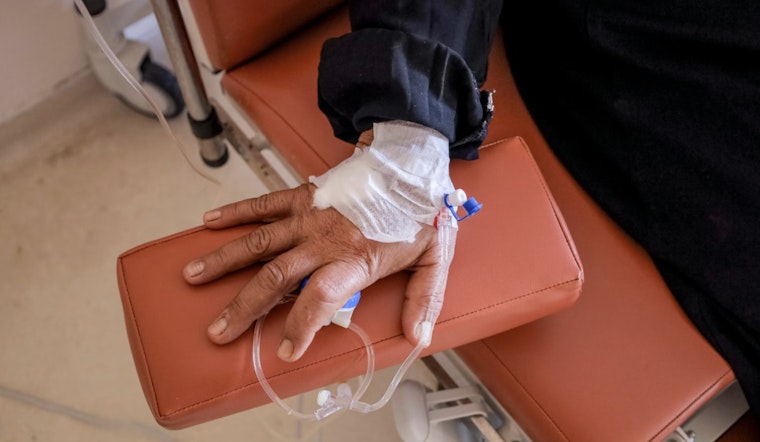
A 37-year-old father of three from Patchogue is now cancer-free following surgery and chemotherapy for a large colon tumor. He completed his sixth and final round of chemotherapy last Thursday and is encouraging younger adults to undergo screenings.
As reported by The New York Post, the man, identified as Travis Travieso, had scans showing a 7.3-centimeter tumor that covered about 90 percent of his colon and was treated as an aggressive stage 2 cancer. The Post reports that surgeons removed the mass and that after he wrapped chemo on Thursday, doctors told him his scans showed no remaining disease.
His care team included surgeons from Northwell Health at Huntington Hospital. Dr. David Rivadeneira, head of the Northwell Health Cancer Institute at Huntington, has noted an increase in younger patients presenting with serious colorectal disease. According to Huntington Now, Rivadeneira reported a 200 to 300 percent rise in rectal and colon cancer cases among patients under 50.
Why doctors are worried
The American Cancer Society’s 2023 report found diagnoses shifting toward younger adults and more advanced stages, and said the share of cases in people under 55 doubled from the mid-1990s to 2019. Experts point to a mix of possible causes, including obesity, poor diet, tobacco use and other lifestyle factors, but say the exact drivers remain unclear, and they emphasize that screening catches cancers earlier when survival rates are highest, according to the American Cancer Society.
How to protect yourself
Federal guidance now recommends routine screening begin at age 45 for people at average risk, and colonoscopy is considered the most definitive test, the U.S. Preventive Services Task Force says.
Local providers and health programs on Long Island are also promoting screening access for people 45 and older, News 12 Long Island reported.
Doctors say that common warning signs include bleeding, persistent abdominal pain, and changes in bowel habits, and they advise anyone experiencing symptoms or with a family history of colorectal cancer to consult a doctor promptly. Travieso told The New York Post that chemotherapy was the most challenging part of his treatment and expressed hope that his experience will encourage younger people to get screened.





