

























































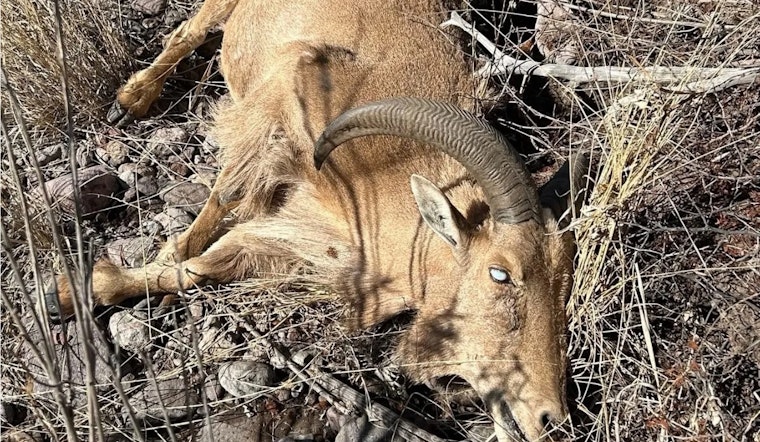
A nasty bout of infectious pink eye is ripping through free-ranging Barbary sheep in the Trans‑Pecos, with state wildlife officials reporting blinded animals and launching an investigation across parts of West Texas. Roughly 25 aoudad have shown severe symptoms across an estimated 30‑mile stretch that runs from Jeff Davis County into northern Presidio County near Marfa and into Brewster County just north of Big Bend National Park, according to officials. The animals are completely free‑ranging, and biologists warn the disease tends to move fast through herds and cannot realistically be treated in wild populations.
What officials are finding
Texas Parks and Wildlife Department biologists first documented the issue in December 2025, and by mid‑February had tallied about 25 aoudad with symptoms across that same 30‑mile zone, the agency reports. According to Big Bend Times, affected animals have shown cloudy eyes with discharge and varying degrees of vision loss, from partial impairment to total blindness, which are classic signs of infectious keratoconjunctivitis.
How the disease spreads
State wildlife staff say the outbreak is probably bacterial in origin, most likely involving a Moraxella species, and note that the infection can spread via flies, blowing dust and close contact between animals. As reported by MySanAntonio, symptoms can range from mildly watery eyes all the way to severe corneal clouding and blindness, and there is no practical way to treat free‑ranging wildlife in the field.
Threat to native herds
Biologists say the situation is troubling not only for the infected animals but also because aoudad already compete with and sometimes displace native mule deer and desert bighorn sheep. The Texas Invasive Species Institute notes that Barbary sheep can over‑browse vegetation and damage crops, and TPWD has previously warned that aoudad carry pathogens capable of devastating bighorn populations. That risk is a major reason wildlife managers keep a close eye on aoudad numbers.
Management options and the law
For land managers, one option is already on the books, though it is not without controversy. In 2025, the Legislature added aoudad to the list of species that may be taken under aerial wildlife management permits, which allows helicopter-based operations for population control. The policy shift and the thinking behind it are detailed by The Texas Tribune.
What ranchers should watch for
TPWD is urging landowners, hunters and local residents to report any aoudad or other wildlife showing eye cloudiness, discharge or apparent blindness, and to contact a veterinarian if domestic livestock start to show similar symptoms. Contact information and county-by-county listings for local wildlife biologists are available in the department’s directory, per TPWD.
Officials say the outbreak appears limited to the Trans‑Pecos for now, but the mobility of free‑ranging herds and the contagious nature of infectious keratoconjunctivitis leave plenty of uncertainty about long‑term effects on regional wildlife and rangelands. For additional details on the outbreak and the state’s advisory, see coverage from Big Bend Times.



