

























































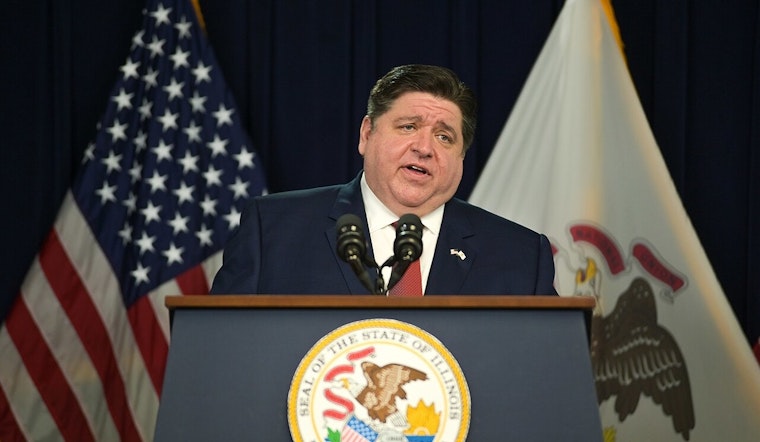
Gov. J.B. Pritzker is ordering Illinois agencies to fan out and find places that could host the state’s next wave of nuclear reactors, with an eye toward having construction underway by 2033. The goal is about 2 gigawatts of new carbon-free power, roughly equal to two conventional reactors, to help guarantee long-term electricity supplies for data centers and other big industrial customers. Pritzker is pitching the move as early-stage homework so state agencies are ready to judge whether new nuclear really belongs in Illinois’ future power mix.
As reported by Crain's Chicago Business, the executive order instructs regulators to craft “a modern legal and regulatory framework” and deliver recommendations within 150 days. The Illinois Power Agency and Illinois Commerce Commission are being asked to scope out potential reactor sites, solicit information from developers and sketch a roadmap that could support around 2 gigawatts of new nuclear capacity. “The executive-order work will equip agencies with information and expertise needed to evaluate new nuclear facilities as part of Illinois' portfolio,” Pritzker told the paper.
State context and recent law
Illinois already leans on nuclear power more than any other state. It runs 11 reactors at six sites that together supply roughly half of the state’s electricity, according to NucNet. Pritzker last month signed a sweeping energy package that ended a decades-old ban on building new reactors and cleared the way for planning and permitting. That landmark energy bill is now being translated into the nuts and bolts of site evaluations, regulatory guidance and outreach to potential developers.
Why the rush: data centers and demand
Lawmakers and industry groups point to a coming wave of power-hungry, AI-driven data centers and other large customers as the main reason to move quickly on firm, carbon-free generation, E&E News reported. States across the country are rolling out studies, task forces and new laws to figure out whether new nuclear plants can realistically be sited and built. In Illinois, officials say early site work and clearer rules are meant to give communities, regulators and utilities time to weigh the tradeoffs long before anyone breaks ground.
SMRs remain promising but unproven
State planners are especially interested in small modular reactors, which on paper can be factory-built, shipped and installed in a wider variety of locations than traditional reactors. Experts, however, note that many of the most advanced designs still do not have operating prototypes in the United States. The National Academies has concluded that while SMRs and other advanced reactors hold promise, they still need substantial testing, fuel-supply development and regulatory work before they can be deployed at scale. That reality helps explain why Pritzker’s order focuses first on legal, regulatory and siting steps instead of rushing straight into construction.
Costly precedent gives pause
The financial backdrop is hard to ignore. The two new reactors at Plant Vogtle in Georgia, the first large U.S. reactors completed in decades, entered service in 2023 and 2024 after years of delays and cost overruns that pushed the price tag toward roughly $35 billion, according to the Associated Press. That experience has made utilities, regulators and consumer advocates wary of merchant nuclear projects that do not have long-term power contracts or public backing. Supporters of Pritzker’s approach say clearer siting rules and explicit community consent are intended to reduce some of the political and financial risk for any future projects.
Officials, critics and community consent
Pritzker’s office says local consent will be central and that the state will not force reactors on unwilling towns, another detail reported by Crain's Chicago Business. The same reporting highlights skepticism from experts such as Mark Pruitt, who warned that a merchant nuclear plant “is not likely to be built because the liabilities are so high,” underscoring how steep the political and financial climb could be. State officials say the 150-day review will also look at whether uprating existing reactors or adding modular units at current nuclear sites might move faster than trying to develop entirely new locations.
What happens next
Under the order, agencies now have 150 days to gather input from developers and deliver their recommendations. Any actual project would still have to clear federal licensing hurdles at the Nuclear Regulatory Commission and navigate years of permitting, financing and local review. Some industry observers argue that boosting output at existing plants or adding modular reactors at those sites could be quicker than starting from scratch, a point NucNet has noted in its coverage. Once the 150-day review wraps, communities, utilities and developers will still face a long series of technical, legal and financial decisions before Illinois can circle any firm construction dates on the calendar.



