

























































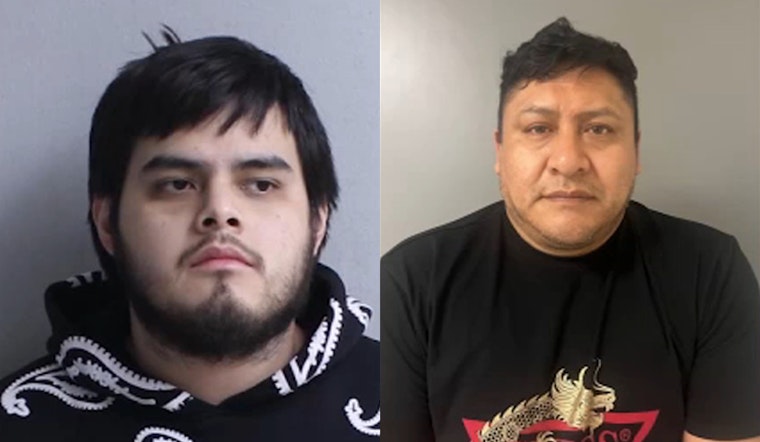
A shooting call in a Pennsylvania suburb has unraveled what authorities say were two competing sex trafficking operations that ran squarely through New York City — shuttling women from Corona, Queens, and Flushing out to a Montgomery County street corner, week after week, for years.
The case broke open on the evening of Feb. 13, when Norristown police responded to a ShotSpotter alert on the 400 block of Sandy Street and found Fernando Meza-Ramirez, 42, of Corona, Queens, bleeding from a gunshot wound to the thigh inside a bullet-riddled Toyota RAV4, according to NBC Philadelphia. Meza-Ramirez initially told officers he'd pulled over after being followed when he came to Norristown to get tacos. That story didn't hold up for long.
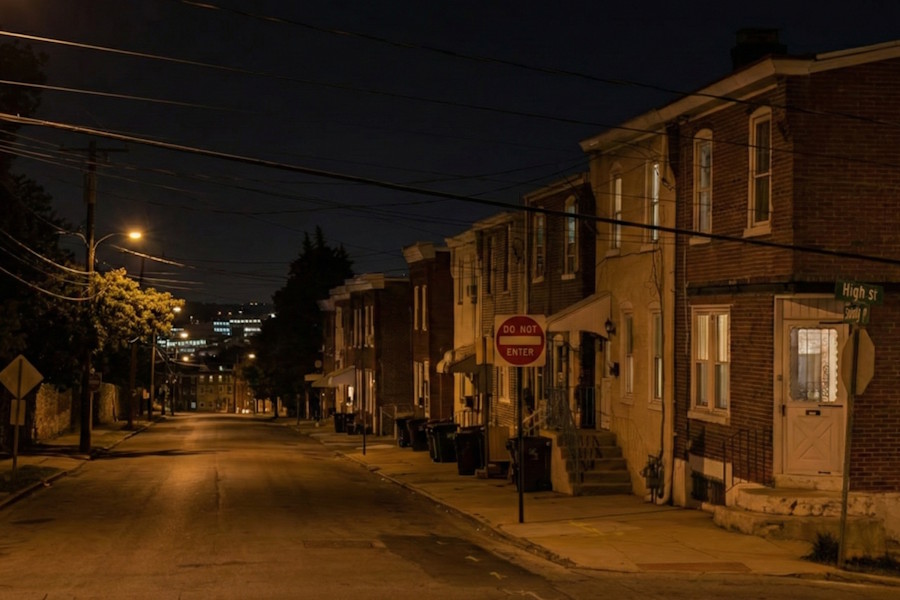
Sandy Street at High Street, Norristown, PA
Business Cards and a Turf War
As investigators interviewed Meza-Ramirez at Paoli Hospital, they noticed something in his wallet: business cards featuring photos of scantily clad women advertising sex services. That discovery, according to The Philadelphia Inquirer, kicked off a joint investigation between Montgomery County detectives and Norristown police that would eventually expose two separate trafficking pipelines operating between New York and Pennsylvania. Meza-Ramirez, investigators determined, was a Mexican national in the country without authorization who had been driving women from New York City to Norristown for prostitution — an operation that, by some accounts, had been running for five or six years.
The man who shot him, authorities say, was 24-year-old Efran Flores-Rodriguez of Norristown — a rival who had reportedly been encroaching on Meza-Ramirez's established territory. According to CBS Philadelphia, a witness told investigators that Flores-Rodriguez spotted Meza-Ramirez's vehicle on Lafayette Street the night of the shooting, followed him to Sandy Street in a stolen white Acura TLX, and opened fire from the back seat. The Acura had been stolen from a Norristown parking lot the night before.
A Victim Found Inside the House
On Feb. 17, detectives executed a search warrant at Flores-Rodriguez's residence on Jacoby Street in Norristown. They found the stolen Acura, two loaded semi-automatic firearms — and a woman from Flushing, Queens, who had been brought to Norristown just the day before, as reported by NBC Philadelphia. The woman told police that Flores-Rodriguez — whom she knew as "Guerro" — provided her a room six days a week and transported male clients to her for sex. The Inquirer reported that Flores-Rodriguez charged clients $60 for 10-minute encounters, and that the woman sometimes saw as many as 15 clients a day, keeping half of what he collected.
The victim also told investigators she had previously worked under Meza-Ramirez — whom she knew as "Leo" — under a nearly identical arrangement, according to The Inquirer. She said Meza-Ramirez's operation had been running in Norristown for about five years before Flores-Rodriguez began moving in on his territory. A neighbor on Jacoby Street, April Montanez, told ABC7 New York that she had grown increasingly uneasy over the previous two months about the late-night activity at the home. "That door, when it shuts, it's like a thump, thump, thump. And it was like, man, 2 o'clock in the morning," she said.
Both Men Arrested, Denied Bail
Both Meza-Ramirez and Flores-Rodriguez were arrested on Feb. 17 and arraigned the following day. Flores-Rodriguez faces charges of attempted murder, trafficking individuals, involuntary servitude, recklessly endangering another person, and carrying a firearm without a license. Meza-Ramirez was charged with trafficking individuals and involuntary servitude. As reported by The Pottstown Mercury, both were remanded to the Montgomery County Correctional Facility without bail by District Court Judge Todd N. Barnes, with preliminary hearings scheduled for April 10, 2026. Online court records do not list attorneys for either defendant.
The arrests were announced publicly on Feb. 19 by Montgomery County District Attorney Kevin Steele and Norristown Police Chief Michael Trail, according to CBS Philadelphia. Steele's office described both men as Mexican nationals, with police confirming Meza-Ramirez was in the country without legal status and noting they believed the same was true of Flores-Rodriguez.
A Pattern Rooted in New York
For New Yorkers, this case has an uncomfortable ring of familiarity. The neighborhoods at the center of this story — Corona and Flushing in Queens — have been identified repeatedly in recent years as hubs for sex trafficking networks that extend well beyond city limits. In January 2026, the final member of the Corona-based Cid-Dominguez Sex Trafficking Organization was sentenced to 35 years in federal prison after a years-long operation that forced victims, including minors, from Mexico into prostitution across New York State and neighboring states, as QNS reported. In a separate 2025 Queens case, two men were indicted for trafficking a woman out of a brothel in East Flushing, according to the Queens District Attorney's Office.
The Norristown case fits a pattern that law enforcement has been tracking for years: trafficking operations use New York's dense immigrant communities as a recruitment base, then move victims to smaller suburban markets in Pennsylvania and New Jersey where there may be less law enforcement pressure and established demand. New Jersey's Attorney General's Office dismantled two separate trafficking rings in 2024 and 2025 that were similarly drawing victims weekly from Queens and Paterson, as noted by the New Jersey Office of the Attorney General.
The Legal Road Ahead
The charges against both men carry serious potential penalties under Pennsylvania law. Trafficking individuals and involuntary servitude are felony offenses; Flores-Rodriguez's attempted murder charge alone could mean decades behind bars if he is convicted. The April 10 preliminary hearing will determine whether the cases proceed to trial. Given that both men were denied bail and that investigators found a victim on the premises during the search, prosecutors appear to have built a substantial evidentiary foundation — though, as with all criminal cases, charges remain allegations until proven in court.
What's perhaps most striking about this case isn't the violence between the two men, but the detail that the same woman had worked for both of them — separately, sequentially, and under nearly identical conditions. It's a reminder that for the victims caught in these operations, the particular identity of the trafficker is almost beside the point. The structure itself is the trap.
If you or someone you know may be a victim of human trafficking, the National Human Trafficking Hotline can be reached at 1-888-373-7888 or by texting "HELP" to 233733.





