

























































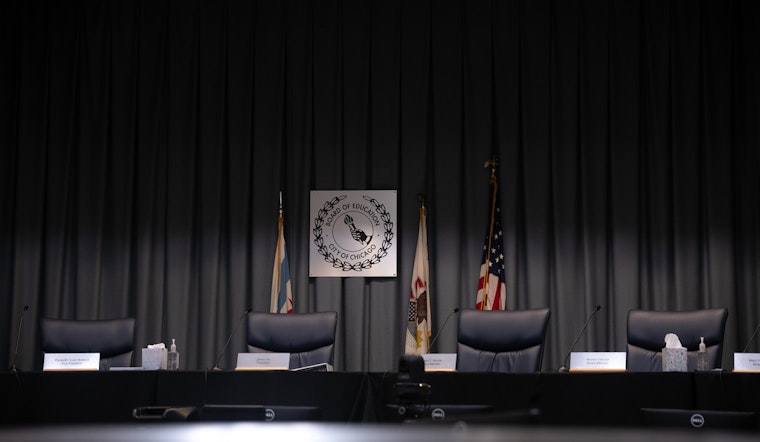
On Monday, State Sen. Graciela Guzme1n and Rep. Will Davis rolled out a new bill aimed at finally chipping away at Illinois' long-running school funding gap. Their pitch is straightforward: if the state orders school districts to provide services like special education or school counselors, it should also send enough cash to pay for them, especially in communities that have endured decades of uneven investment.
As reported by CBS Chicago, Guzme1n put it bluntly, saying, "A promise without funding is not a promise." The outlet noted that Davis joined her in introducing the measure and that the Chicago Teachers Union backed the plan, arguing that education must be fully funded in communities that have been systematically shortchanged. Supporters say the proposal is designed to guarantee districts receive the state dollars needed to run the very programs the law already requires.
How the evidence-based formula is meant to work
The Evidence-Based Funding law, adopted in 2017, was supposed to overhaul how Illinois sends money to schools by focusing on student need and setting annual targets to bring under-resourced districts up to what the state calls adequacy. According to the Illinois State Board of Education, the formula steers more resources to districts that sit furthest from those adequacy targets.
Policy analysts say the system has helped narrow some gaps, but not nearly fast enough. The Center for Tax and Budget Accountability and other local reporting have noted that progress has been gradual. WBEZ reported that the law envisioned roughly $350 million in minimum yearly increases, yet hundreds of districts are still below adequacy.
What this means for Chicago
The dollar stakes in Chicago are especially high. The Chicago Teachers Union has argued that Chicago Public Schools is owed about $1.1 billion under the evidence-based calculations. According to the union, those persistent shortfalls have shown up as layoffs, fewer school counselors and strained student supports, particularly in neighborhoods with the greatest needs.
Sponsors say their bill is meant to lower the temperature around perennial fights over unpaid mandates by drawing a clearer line between what the state requires and what it is actually willing to fund. In theory, that connection would make it harder to ignore the cost of those mandates when budgets get tight.
What comes next
The proposal now heads into the usual legislative grind: committee hearings, floor debates and votes, and then a showdown over whether it wins a spot in the state budget that actually changes how money flows. That will not be easy in a lean budget year. WBEZ notes that the governor's office is projecting about a $2.2 billion shortfall for fiscal 2027, which complicates any talk of new or expanded appropriations.
Advocates say the bill gives them another lever to pull as they press lawmakers to fully fund what the evidence-based formula already assumes. They plan to keep a close eye on committee action in Springfield to see whether this latest attempt to close the gap actually gets the money to match the rhetoric.



