

























































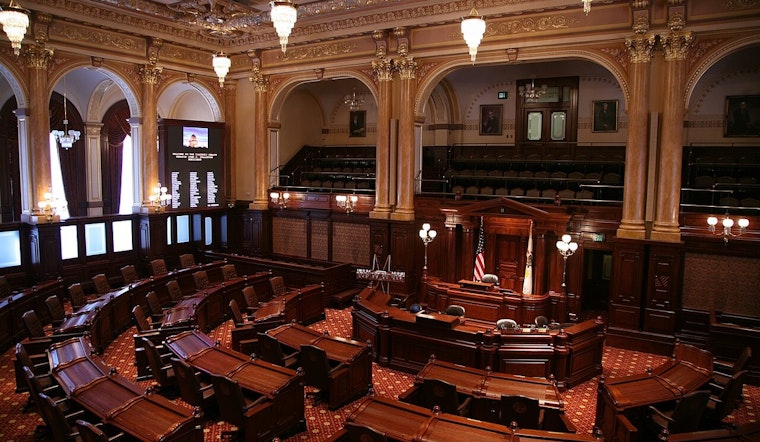
State Sen. Neil Anderson has ignited a political firestorm at the Capitol, filing a sweeping "Abolish Abortion" bill that would treat a fertilized egg as a legal person and could make most abortions chargeable as homicide. Hours after defending the proposal at a Tuesday news conference in Springfield, Anderson stepped down from a Republican leadership role and was stripped of his minority spokesperson slots on two Senate committees.
Filed Feb. 5 as SB3572, the measure would amend the Criminal Code so that "person," "individual" and "another" all include a "preborn child at any stage of biological development, from fertilization until natural death," and it would subject enforcement involving an unborn child to the same presumptions and defenses that apply in homicide cases, according to the Illinois General Assembly. The bill was filed with the Secretary on Feb. 5 and sent to the Assignments Committee.
Senate Republican Leader John Curran did not mince words, denouncing the proposal as "extreme" and "anti-woman" and removing Anderson as the minority spokesperson on the Senate Executive and Assignments committees, according to ABC7 Chicago. Curran said he and other GOP leaders spoke with Anderson about leadership duties before the shakeup.
Standing at the Capitol podium, Anderson framed the bill as a hard-line deterrent. "The important part of this bill is deterrence," he said, adding, "we are outlawing abortion," while insisting he does not want to see women jailed. At the same news conference, he was flanked by Arizona pastor Jeff Durbin of End Abortion Now, who likened abortion to slavery and the Holocaust, according to ABC7 Chicago.
Legal implications
SB3572 would fold "preborn" victims into Illinois homicide and assault statutes and could open patients, medical providers and third parties to criminal charges and civil lawsuits. The bill text carves out limited protections for unintentional deaths tied to life-saving procedures and for spontaneous miscarriages, according to language on the Illinois General Assembly site. Reproductive-justice advocates and legal analysts warn that personhood language can reach far beyond abortion, with potential consequences for in-vitro fertilization, investigations into miscarriages and routine obstetric care, a pattern tracked by organizations that monitor shifts in state law.
How this fits the national trend
Efforts to write fetal personhood into law have been spreading across the country since the U.S. Supreme Court's Dobbs decision, generating proposals that range from largely symbolic declarations to measures that would criminalize abortion itself. Activists on both sides say the fight is no longer confined to legislative hearing rooms, but now plays out in court cases, medical settings and election campaigns.
Political fallout and what's next
Anderson has also refiled legislation this month to bring back the death penalty for first-degree murder and certain other crimes, and neither his personhood bill nor his death-penalty proposal has picked up a single Republican cosponsor, according to reporting by Daily Herald. With Democrats in control of the governor's office and holding majorities in both legislative chambers, the measures face steep odds in Springfield, even as they have already exposed a public rift inside the Illinois GOP.
For now, the bills sit in committee while activists and political strategists gauge whether criminalizing personhood will surface as a defining issue in the 2026 campaign cycle. Legislative leaders say they intend to advance only those proposals that enjoy broad support within their caucuses, leaving Anderson's bills to be tested first in the court of public opinion rather than on the Senate floor.



