

























































Illinois is gearing up for a fight over who gets to wear a badge. A newly filed bill in Springfield would block certain federal immigration agents hired during the Trump administration from taking jobs with state or local police, and it is already stirring up a political and policing brawl.
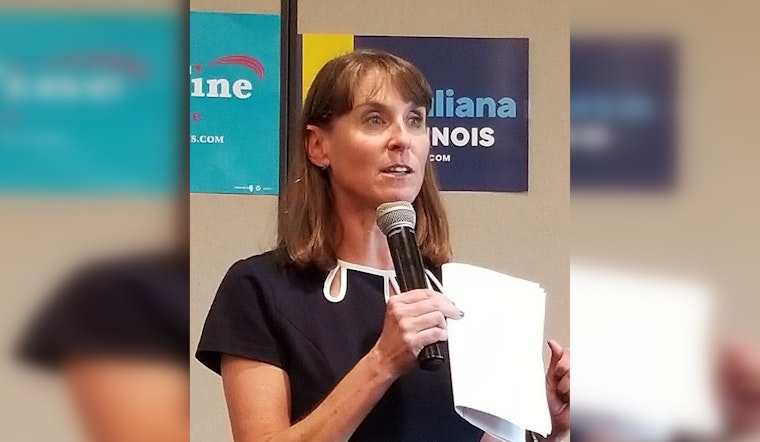
State Sen. Laura Fine filed SB2820 this month. The measure singles out Immigration and Customs Enforcement officers brought on between January 20, 2025 and January 20, 2029, and would bar them from joining state and local departments. Supporters frame it as a hard line on what they see as abusive immigration enforcement tactics, while law enforcement groups warn the state is about to shut the door on badly needed recruits.
What the bill would do
The proposal, formally titled the Prohibited Hiring of Federal Immigration Officers Act, says a law enforcement agency may not hire anyone who was employed as a federal immigration officer by ICE during that 2025–2029 window, according to the bill text on the Illinois General Assembly website. The bill defines “law enforcement agency” broadly, covering the Illinois State Police, local police departments, and campus police.
The measure also includes a home rule provision aimed at limiting conflicting local hiring rules, so cities and other home rule units cannot easily carve out their own exemptions. According to the bill text, the restriction expressly covers hires made by ICE between January 20, 2025, and January 20, 202,9 and relies on specific legal definitions and carveouts that are laid out in full in the legislation. See the complete language at the Illinois General Assembly.
Sponsor's rationale
Fine, a Democrat from Glenview who is also running for Congress, is not shy about why she is pushing the bill. In a campaign press release, she described what she sees as a pattern of “violence and intimidation” tied to recent federal immigration operations and argued that “ICE is out of control.”
Her pitch to voters and colleagues is that the state should not bring those same officers into Illinois police ranks. She says the measure is designed to prevent further harm and to hold federal officers accountable for their actions. Her full statement appears on Laura Fine for Congress.
Law enforcement reaction
Police voices on the other side say Fine is throwing away valuable experience at exactly the wrong time. Retired Riverside Police Chief Tom Weitzel, writing with the conservative advocacy group Awake Illinois, warned that the proposal would “turn away experienced, highly trained federal law enforcement professionals” when many departments are already struggling to fill open positions.
Awake Illinois has started organizing against SB2820, arguing that recruitment and retention problems would get worse if the hiring ban moves forward. Weitzel’s comments and the group’s early plans to oppose the bill were reported by Patch.
How this fits into a national wave
Fine’s bill is not happening in a vacuum. Across the country, state lawmakers are responding to recent federal immigration enforcement actions in major cities, part of a broader push that national outlets say accelerated after a high-profile killing in Minneapolis in January.
Politico has tracked similar efforts from California to New York, where legislators are exploring new limits on cooperation with federal immigration authorities and on the role of ICE in local public safety. In Illinois, the fight is already on local television: Chicago station Fox 32 Chicago aired a brief segment on Fine’s proposal on February 4.
Where the bill stands
For now, SB2820 is at the starting line. The bill was filed in mid-January and sent to the Senate Assignments Committee, according to legislative records. Several Democratic senators have already signed on as co-sponsors.
Backers say they intend to push the measure once committees resume hearings in Springfield. Opponents are preparing to argue that the hiring ban would hurt recruitment and could undermine public safety. Tracking data on filing dates, sponsors and early legislative actions for the bill are available at LegiScan.
Legal backdrop
The fight is unfolding against a larger backdrop of legal and political clashes over federal enforcement in Illinois. State and city officials have already taken litigation steps in response to federal deployments in recent weeks, underscoring a wider strain between state and federal approaches.
Those parallel legal moves hint at where SB2820 could be headed if it passes. Any novel limit on who local agencies can hire, especially when it directly targets federal officers, is likely to draw arguments about constitutional limits and federal preemption. Legal analysts who track state-level challenges and constitutional disputes have followed related cases, and Just Security documents filings and updates in that broader litigation landscape.
For now, SB2820 sits in committee, but it is poised to become a flashpoint in Springfield debates over accountability, community safety and how to build a law enforcement workforce. Supporters say the bill is a necessary line in the sand to protect communities. Opponents say it slams shut an important recruitment pipeline, and lawmakers will have to decide where they stand as the measure moves through the process.



.jpg)