

























































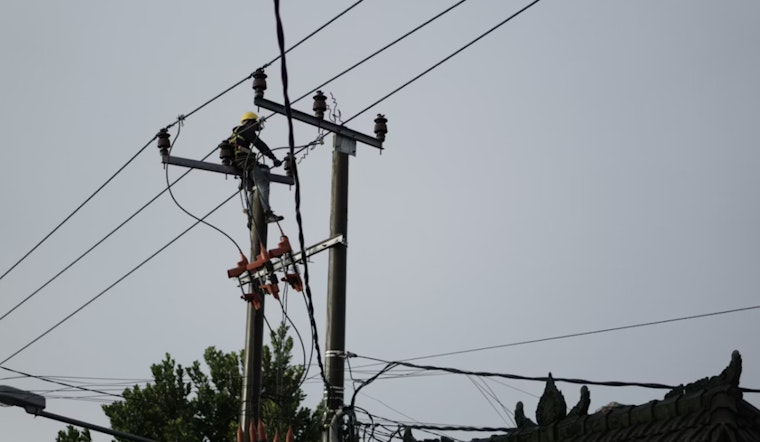
If your electric bill was a jaw-dropper this month, you have plenty of company. Across New Orleans and the wider Gulf South, those bigger numbers are mostly the result of post-storm repairs, planned grid hardening and a growing stack of regulatory riders that spread multi-year costs over residential customers. Utilities are now phasing the price of those upgrades into rates, which is why new line items are starting to pop up on monthly statements.
Entergy’s resilience plan and what it costs
Entergy Louisiana is in the middle of a multi-year resiliency push that the company says will swap out thousands of poles, reinforce power lines and harden substations so that outages are shorter and less frequent. Phase-one costs are pegged at about $1.9 billion, and the utility told regulators that the initial monthly hit for a typical 1,000 kWh household would be modest, roughly $0.57, with a possible climb to about $7 a month by the end of the five-year phase, according to Entergy Louisiana. The company says it will chase federal grants to soften the blow and file quarterly construction reports as the work moves ahead.
Storms and distribution spending are big drivers
National research points to transmission and distribution costs as a major reason retail electricity prices have climbed. These are the poles, wires and neighborhood systems that utilities rush to repair or replace after extreme weather. The Lawrence Berkeley National Laboratory’s 2024 update ties the different state-by-state price jumps to things like storm recovery, wildfire mitigation and pipeline constraints, which helps explain why some parts of the country have seen sharper increases than others, as Berkeley Lab shows.
Florida storms pushed costs onto ratepayers
Florida’s 2024 hurricane season, which included storms Debby, Helene and Milton, brought billions in damage and tens of thousands of restoration claims, and state regulators have signaled that utilities are moving to recover much of that from customers. Staff at Florida’s Public Service Commission recommended about $1.2 billion in cost recovery for one major utility, and other companies have filed similar requests that would be collected through riders or rate cases, according to reporting by WUSF. Those cases are a big reason some households in the hardest-hit service territories are seeing a steeper climb in their bills.
Data centers aren’t the whole story
Data centers have become a handy villain in national conversations about power prices, but federal snapshots tell a more complicated story. In Virginia, the country’s biggest data center hub, residential retail prices rose only about 3 percent between May 2024 and May 2025, even as new facilities switched on, based on analysis of EIA data reported by Axios. Local projects built to serve hyperscale customers can still be expensive where utilities need entirely new high-capacity lines or substations, but in some places the added demand also spreads fixed costs, which can mute rate impacts, as Berkeley Lab found.
Regulators, riders and rate cases to watch
Nearly all resilience and storm recovery spending has to pass through state regulators, who decide how much of those dollars land on customer bills and how quickly. Entergy’s filings and the Louisiana Public Service Commission’s approvals lay out recovery through a resilience rider, quarterly reporting and a metric tied to pole performance, according to company materials. In Florida, filings related to the 2024 storms are moving through public dockets, so the final customer impact will depend on how regulators rule and what grants or other offsets utilities are able to secure, according to local reporting.
What households can do right now
Homeowners and renters still have a few tools to blunt the damage. It is worth checking for any utility bill assistance programs, asking about energy efficiency or weatherization offerings, and reviewing time-of-use or similar rate plans that might trim monthly costs. Berkeley Lab notes that behind-the-meter upgrades, such as efficient heat pumps, smart thermostats and weatherization, along with targeted federal or state grants, can help cushion the impact of rising retail power prices over time. Many utilities also advertise assistance programs or phased-in recovery for low-income customers. If you see a new rider show up on your bill, you can look up the associated docket number and submit comments to the commission, since public input is a standard part of the process.
This piece draws on reporting by Grist and on New Orleans coverage that republished that reporting, along with utility filings and government data, to explain what is appearing on bills locally and across the country. For more detail on the state and utility filings mentioned here, see the original coverage on New Orleans CityBusiness and the sources linked throughout this story.





