

























































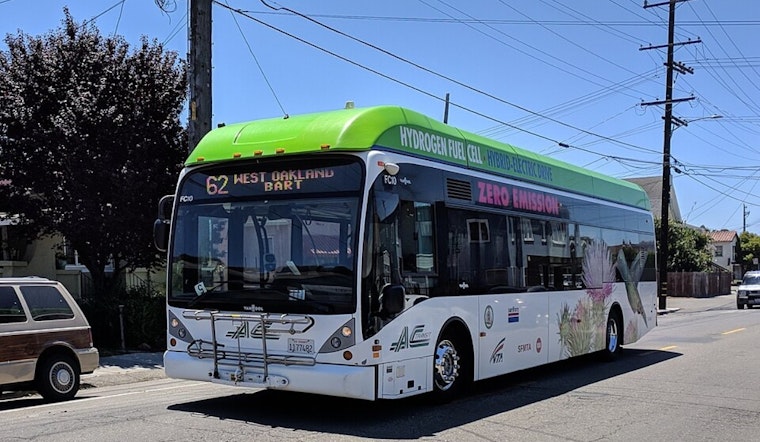
East Bay bus riders just got a sobering wake-up call. AC Transit’s board has signed off on a contingency game plan that could shrink service by double-digit percentages and put hundreds of jobs on the line if new, long-term funding does not show up in time.
The vote, taken last Wednesday, directs staff to draw up two alternate service blueprints that would only kick in if a stable revenue source fails to materialize. Riders will not see specific route-by-route proposals right away, but should expect draft maps and schedules to surface in the coming months as staff turns the broad framework into detailed cuts.
Board sketches two cut scenarios
According to AC Transit, the framework lays out two possible paths. One option would close a $36.76 million shortfall and trim bus service by about 11.4 percent, potentially affecting up to 200 employees. A deeper option would plug a $53 million gap, require about a 16.4 percent service reduction, and put as many as 300 positions at risk.
The district is warning of projected annual operating deficits near $50 million starting in fiscal year 2027-28. To buy a little time, AC Transit says it will receive up to $55 million in a one-time state loan meant to help steady operations in fiscal 2026-27. Officials stress that the new framework is a contingency plan only, and that no cuts would move forward if long-term funding comes through.
Least-used lines could face the chop
Any future cuts would be guided by productivity metrics, which is a wonky way of saying that the quietest lines are in the greatest danger. As reported by The Oaklandside, some routes have been carrying single-digit riders per hour. Route 19 averaged about 8.7 riders per hour, Route 281 about 8.1, and Route 56 roughly 10.1 riders per hour.
Staff also told The Oaklandside they will try to avoid chopping off segments of the recently redesigned Realign core network, which AC Transit has pitched as the backbone of its future service map.
Sales tax lifeline in the works
To avoid those doomsday maps becoming reality, regional officials are banking on a new funding stream. A five-county sales tax measure, authorized by the state Legislature last year, is being crafted as the main rescue vehicle. If voters say yes, the Metropolitan Transportation Commission estimates the tax would generate roughly $980 million a year.
What riders should watch for next
For now, AC Transit staff will take the board-approved framework and turn it into two draft service plans that spell out proposed changes line by line. Those drafts are expected to come back to the board for a vote on June 10. Any plan the board adopts would then go through the required public hearing process and could be folded into the June 2027 service change.
"Planning for the worst while fighting for better," is how Sarah Syed put it, as reported by The Oaklandside. AC Transit says it will try to shield the Realign core network as it drafts the scenarios, and that the contingency cuts will stay on the shelf if a durable funding package comes together in time.





