

























































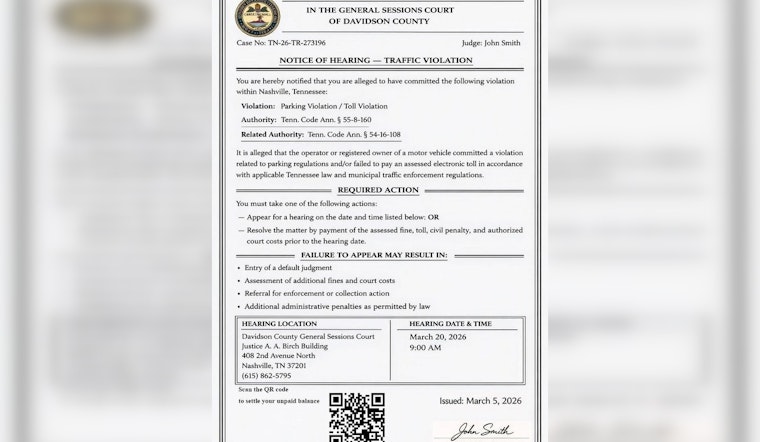
A sharp-looking “court notice” demanding fast cash and dangling a QR code as the easy way to “settle your unpaid balance” is making the rounds in the Nashville area, and police say it is pure fiction. The Livingston Police Department took to Facebook on Thursday, March 19, 2026, to warn residents not to scan the code. The document sprinkles in a judge or clerk’s name and a downtown court address so it looks like the real deal, but officers say it is not.
What the notice says
According to the document, which is dated March 5, 2026, the mailing comes from “John Smith, clerk of the court” and accuses the operator or registered owner of either a parking violation or failing to pay an electronic toll. It lists a hearing for March 20 at 9:00 a.m. at the Justice A.A. Birch Building and tells recipients to scan the printed QR code to “settle your unpaid balance.” The whole thing is bogus, according to the Livingston Police Department (Facebook).
Why you shouldn't scan QR codes
Scammers increasingly tuck malicious web addresses inside QR codes, a tactic the FBI has flagged as a way to steer people to credential-stealing pages or fake payment portals that can slip past common email filters. The Tennessee Attorney General's office has also put out warnings about QR-code schemes and urges people to confirm who is really sending a code, preview any links, and stay away from unsolicited QR prompts. Similar phony court and toll notices have popped up in other cities, highlighting a regional and national rise in quishing-style frauds.
If you scanned or paid
Anyone who scanned the QR code and typed in payment or personal information is urged to contact their bank or card issuer right away to challenge any charges and lock down their accounts. Officials also recommend filing a report with the FBI's Internet Crime Complaint Center and the Federal Trade Commission, and Tennessee state troopers have advised victims of fake ticket texts and notices to submit complaints through IC3. Keep the mailer, along with any receipts or screenshots, and get in touch with local police so investigators can look for trends.
Legal context
The flyer references Tenn. Code Ann. § 54-16-108 and § 55-8-160, which cover rules for controlled-access roadways and parking restrictions. Dropping those citations onto a flyer, however, does not magically turn it into a legitimate summons. For the statutes' text, see the Tennessee code entries on Justia: Tenn. Code § 54-16-108 and Tenn. Code § 55-8-160.
How to verify and where to check
Anyone unsure about a notice should skip the phone numbers and links printed on the flyer and instead confirm case information directly through the official website and published contact numbers for the Trial Courts of Metropolitan Nashville & Davidson County. If the mailer looks suspicious, hang on to it and share it with local law enforcement. Livingston's Facebook alert is only the latest local reminder that courts are not reaching out through random QR code postcards.


