

























































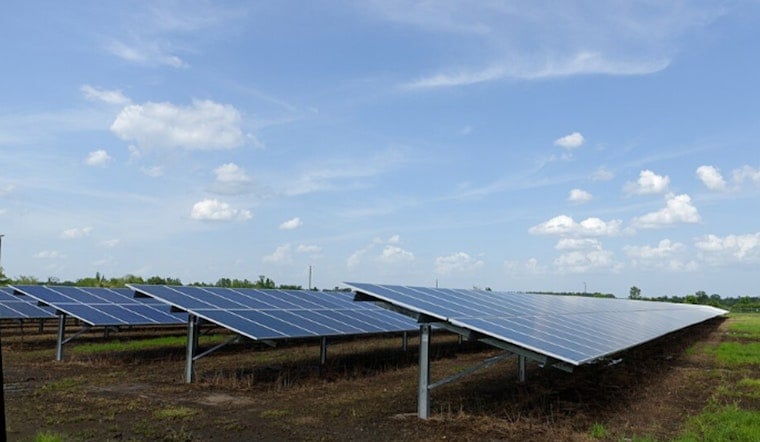
Farmland on the edge of Crete just moved a big step closer to becoming a sea of solar panels, after a Will County planning panel on Monday advanced a special-use request for a massive project that could cover roughly 2,400 acres in and around the village.
Commission nudges giant solar build toward final vote
The Will County Planning and Zoning Commission gave preliminary approval to Earthrise Energy's special-use permit for about 1,900 acres in unincorporated Will County. The Village of Crete has already annexed roughly 200 acres and plans to annex about 620 more, bringing the total footprint to about 2,400 acres, according to the Chicago Tribune.
Officials and the company say the project would generate roughly $2.3 million in new revenue for local taxing bodies in its first year, with about $1.2 million slated for Crete-Monee School District 201-U, $135,000 to Will County, and roughly $40,000 to the village. Earthrise told officials that routing payments directly to taxpayers would be possible but ultimately up to the school board. The Tribune also reports the company expects to decommission the site after roughly 35 years and that the county board will consider final approval on April 16 in Joliet.
Developer leans on jobs pitch and existing grid ties
Earthrise and its supporters are selling the development as both a clean-energy play and a local economic boost, estimating several hundred temporary union construction jobs during buildout and about 30 permanent positions once the project is operating. Company representatives say they can plug into nearby transmission capacity by tying into Earthrise’s existing Crete generation infrastructure, which they argue shortens interconnection timelines.
Local reporting has described developers offering community payments and negotiating road-use and interconnection agreements as they chase permits. Beecher Local has covered that outreach and the company’s employment pitch.
Farmers and neighbors say they were kept in the dark
Opposition has been loud and pointed from farmers and nearby residents, who argue they were not properly notified and warn that the largely rural area could be permanently transformed if the project goes through. Residents and a local attorney told the commission that missed or late notices could invite legal challenges, and several farmers said they never received flyers or direct outreach from the developer, according to the Chicago Tribune.
At the same hearing, at least one union leader complained his union had been shut out of hiring talks, even as Earthrise said it had agreed to employ workers from three unions. That dispute added another layer of tension to a project already splitting neighbors who see either a welcome revenue stream or an industrial-scale intrusion into farm country.
Variances, looser mowing rules, and what comes next
The commission also approved several variances that depart from typical county standards. Those include allowing ground cover up to 36 inches tall instead of a more common 13 inches and limiting mowing to one pass between May and October instead of the usual five times. Supporters say those changes help habitat, while opponents call them unusually lenient for commercial farmland.
Similar planning and zoning rulings on height and maintenance have surfaced in other Will County solar cases as officials juggle land-use questions with environmental goals. Frankfort Local has reported on prior commission decisions that walked the same tightrope.
With the Planning and Zoning Commission’s recommendation now logged, the proposal heads to the full Will County Board for a final vote. The board’s review is set for mid-April, and whatever happens there will determine whether the project moves into construction planning and the remaining permitting steps that developers say could put panels in the ground within the next 12 to 18 months.
For eastern Will County, the committee’s action marks a high-stakes moment in a running debate. Supporters point to new tax revenue and union jobs, while opponents warn of lost farmland and neighbors sidelined in the process, all playing out over thousands of acres that could shift from crops to solar if county leaders sign off.





