

























































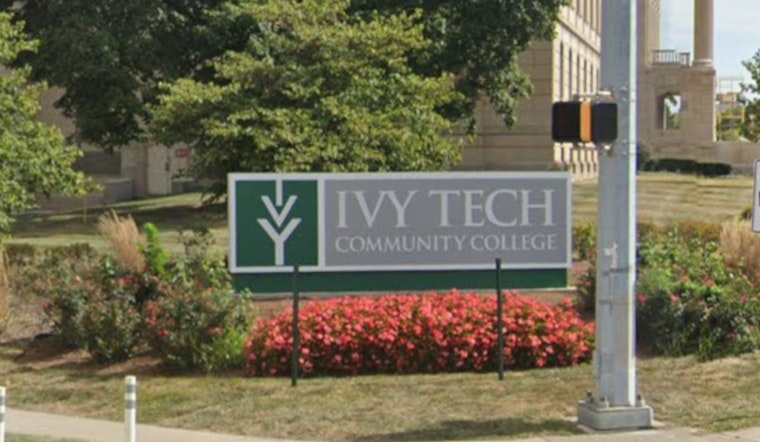
Ivy Tech Community College is getting a mission makeover, and it is all about jobs. A newly signed Indiana law reshapes the college’s founding statute so that employer aligned workforce training sits squarely at the center of what Ivy Tech is supposed to do. The measure tightens governance, hands campus advisory boards fresh budget and program duties, and formally writes dual credit and dual enrollment into the college’s purpose. Backers say the goal is simple: move programs faster to meet local hiring needs while keeping training within financial reach for students.
Senate Enrolled Act 254, authored by State Sen. Greg Goode of Terre Haute, cleared the Legislature without recorded opposition and was signed by Gov. Mike Braun on March 5, 2026. In a statement that accompanied the bill, Goode said the measure is meant to strengthen Ivy Tech’s ability to partner with employers as the state’s workforce needs shift. The bill’s final status and roll calls are posted on LegiScan, and Goode’s release appears on the Indiana Senate Republicans site.
What the law does
The statute rewrites Ivy Tech’s mission language so the college is described as “the workforce engine for the state of Indiana” and explicitly adds dual credit and dual enrollment to its statutory charge. It also broadens the statewide board’s required expertise to cover logistics, information technology and life sciences, signaling where lawmakers expect future growth.
On the governance side, campus advisory boards pick up new responsibilities. Under the law, boards may include employer representatives who operate in the campus service area, work with campus chancellors to nominate candidates for vacancies, review campus budgets and recommend operational efficiencies and program alignment. Those details are laid out in the official bill text for Senate Bill 254.
What agencies must do
The Legislative Services Agency’s fiscal note explains that the law orders the Indiana Economic Development Corporation to build an “education to employment” research program and a framework for data analysis and sharing, with key deliverables due by Dec. 1, 2026. The same document confirms the statute’s effective date of July 1, 2026, and flags only minor, indeterminate administrative impacts on Ivy Tech and the IEDC. Those findings appear in fiscal materials from the Legislative Services Agency.
Why lawmakers pushed it
Supporters have been pointing to a 2025 white paper co authored by Ivy Tech and TEConomy Partners that found roughly 69% of projected openings in key industry sectors will require education or training beyond high school. The same analysis estimated Indiana must upskill or reskill more than 82,000 learners each year to keep up. The report highlights gaps in advanced manufacturing, healthcare, logistics and technology, and it underpins the bill’s emphasis on short term, employer aligned credentials. The study and its overview are shared in Ivy Tech’s white paper and in the underlying release from Ivy Tech and the TEConomy report linked from the college’s site.
Ivy Tech's role and reaction
Ivy Tech officials have leaned on affordability to make the case for expanding this kind of training. President Marty Pollio told the public in October 2025 that “87% of Ivy Tech students who graduate do so with no debt,” a statistic the college cites to argue that scaled skills programs can reach large numbers of Hoosiers without heavy loan burdens. College leaders and the bill’s supporters contend that the new law lines up governance with the institution’s workforce mission, rather than narrowing who can walk through the door. Those points appear in Ivy Tech’s public statements and in the bill author’s press materials from Ivy Tech and the Indiana Senate Republicans.
With the measure now enacted as Public Law 130, campus advisory boards and the statewide board have the summer to get ready for the new duties that kick in on July 1, 2026, while the IEDC starts planning the education to employment research program the statute requires. Lawmakers and employers say they will be watching how campus boards use their new authority to recommend program alignment and budget efficiencies in real time. The next few months will test whether these governance tweaks actually speed up hiring pipelines and credential pathways for students. The bill’s final legislative actions are recorded on LegiScan.
For those wanting a closer look at how it could play out on the ground, local coverage and Q&A on the measure appear in reporting from WTHI-TV and in statewide reporting from WFYI as stakeholders prepare for the changes this summer.



