

























































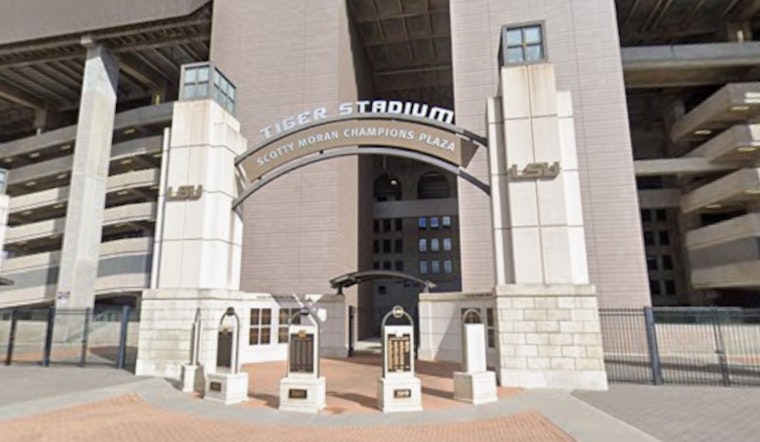
LSU professors are rolling out the Southeast Community Energy Futures Academy, a year-long effort that aims to give community leaders across the Southeast clear, jargon-free tools to evaluate carbon capture and other emerging energy technologies. The academy pulls together academics with faith, nonprofit and civic leaders from Georgia, Alabama, Mississippi and Louisiana to create shared resources, including a citizen's handbook, that help locals weigh jobs, safety and environmental trade-offs. Organizers emphasize that the project is about boosting technical literacy, not selling any particular development, so residents can show up prepared for permitting and planning debates. The pilot for the Southeast Community Energy Futures Academy, or SCEFA, opened with a two-day workshop on LSU's Baton Rouge campus in January.
Kickoff and hands-on learning
That opening workshop mixed classroom-style discussions with field time. Participants toured LSU’s Petroleum Research, Training and Testing (PERTT) lab, visited a carbon injection site and joined breakout sessions focused on transport, storage and community engagement, according to the LSU College of the Coast & Environment. Professors, graduate students and representatives from community organizations worked in small groups to surface the questions they most often hear from residents when new energy projects are proposed. Organizers say the lab tours and site visit helped faith leaders and other community partners build a concrete picture of technical concepts that usually arrive in their communities as dense reports or glossy pitch decks.
Who’s behind SCEFA
The academy is co-led by LSU environmental sciences professor Margaret Reams and Georgia Tech professor Jennifer Hirsch and grew out of Georgia Tech’s regional work on direct air capture, according to Georgia Tech’s Center for Sustainable Communities. Georgia Tech describes SCEFA as a train-the-trainers pilot that pairs community leaders with technologists so they can co-develop educational tools that can be put to use in real meetings and town halls. The program is co-sponsored by several of Georgia Tech’s energy and sustainability institutes, which helped shape the academy’s curriculum for the first cohort.
Federal funding and regional context
The academy sits inside a broader wave of federal investment in carbon management. The U.S. Department of Energy has funded regional direct air capture work in the Southeast, and SCEFA pulls participants from Georgia, Alabama, Mississippi and Louisiana, according to the LSU College of the Coast & Environment. The department has also backed design and feasibility studies for a Southeast Direct Air Capture hub led by the Southern States Energy Board, an effort that helped spur new education programs in the region, per the U.S. Department of Energy. Organizers say SCEFA is meant to put communities in a stronger position before proposals for capture, transport and storage ever hit local permitting desks.
What the handbook will cover
As Louisiana’s contribution to the academy, Reams is working with LSU environmental sciences professor Brian Snyder and Leigh Rachal of the Louisiana Interchurch Conference to produce a citizen’s handbook, as reported by The Reveille. “We have a real role to play,” Reams told the paper, describing the university’s push to offer practical information that can lift public understanding of carbon management. The handbook is expected to spell out who approves permits, which regulations apply and the core questions residents should ask when deciding whether to back or oppose a carbon project in their area.
Trade-offs and local concerns
Organizers do not shy away from the risks that worry residents. Snyder told The Reveille that “an underground carbon dioxide pipeline leak would be detrimental but those leaks are rare,” and he stressed the importance of asking whether promised jobs will actually land with local workers. The academy’s working groups are structured to bring those concerns to the surface so community leaders can press developers and regulators on hiring commitments, safety planning and long-term monitoring before any project moves ahead.
What comes next
Next on the agenda is a follow-up presentation to the Louisiana Interchurch Conference in New Orleans, along with outreach to additional community partners across the region as the academy builds out its materials. Georgia Tech frames the pilot as a training model that could be copied in other states, and SCEFA organizers expect to roll out the handbook and training modules later this year for community groups to use in their own planning and permitting conversations, according to Georgia Tech’s Center for Sustainable Communities.



