

























































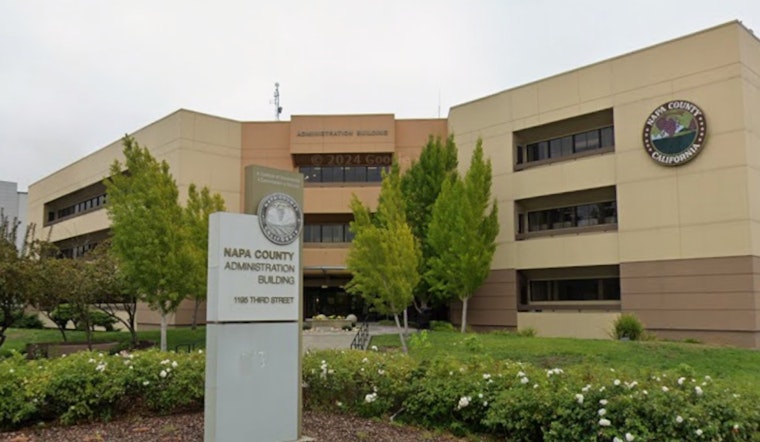
Napa County’s budget buffer is getting uncomfortably thin. Yesterday, county supervisors were warned that the financial cushion they have relied on in recent years is shrinking even as costs keep climbing and tax revenues remain cool.
Staff rolled out the recommended fiscal year 2025–26 budget and laid out the new reality: slower tax receipts and rising expenses are squeezing options for fresh services and one-time projects. That leaves county leaders staring at some familiar but unpopular choices, like dipping into reserves or trimming plans.
County Executive Officer Ryan Alsop told the board that primary discretionary revenues are coming in below expectations and urged departments not to add service levels or staff unless they can find offsets. He and his team pointed to a series of hits, including a projected year-end carryover of about $11.2 million, roughly $10.3 million in lower-than-expected tax receipts, and one-time repair needs such as $8.5 million for storm-damaged roads. The tax gap includes about $7 million in property taxes, $550,000 in sales tax, $2 million in Proposition 172 funds and $750,000 in lodging taxes, all while insurance and employee health costs are rising. As reported by the Napa Valley Register, staff said those shortfalls and cost increases have left the county with less room to absorb future shocks.
Budget Math: Reserves, ERAF and the Big Picture
According to Napa County, the proposed general fund for FY 2025–26 is about $341.3 million, with an all-funds spending plan just under $1 billion. The county’s Budget in Brief also highlights multi-year capital projects and a three-year agreement with CAL FIRE, although staff cautioned that some of those one-time resources are making ongoing revenues look healthier than they really are.
The board’s 2024 decision to allow Excess ERAF to be folded into the Recommended Budget is spelled out in the county’s budget policy guidelines, per Napa County Legistar. That policy shift helps explain why Napa County is counting on roughly $30 million in one-time ERAF revenue this year, as reported by The Press Democrat.
Supervisors Press for a Workshop
Supervisor Belia Ramos did not sugarcoat her reaction, telling colleagues she was “incredibly concerned” about what she described as a pattern of declining fund balance. Supervisor Joelle Gallagher called for a dedicated budget workshop so the board can hash out priorities before the formal hearings in June. Those comments came during the same briefing where staff outlined the revenue gaps and rising costs, according to the Napa Valley Register.
What It Could Mean for Services and Roads
For now, the county’s capital and maintenance needs - from flood-disaster road repairs to pavement and bridge work - remain in the budget. But staff warned that recurring service expansions should not be built on one-time ERAF dollars, a caution spelled out in Napa County budget materials. Local coverage has noted that Napa County is continuing to fund priority programs while openly flagging long-term uncertainty about recurring revenues and the risk that comes with leaning on temporary cash.
What’s Next
Public budget hearings are set for mid-June, with final adoption expected later in the month. Supervisors say the requested workshop should help frame the tough calls ahead, whether that means drawing down reserves, cutting back plans or exploring new revenue options. The Press Democrat reports that the board expects to wrap up formal hearings and adopt a final budget in late June.





