

























































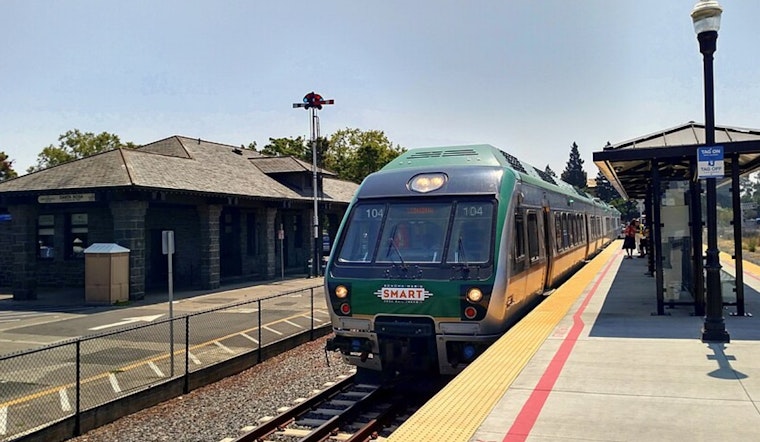
After years of talk and tentative timelines, the SMART rail extension into Healdsburg is finally on deck to trade planning documents for work crews this spring. The project promises a new downtown station and nearly nine miles of rail and pathway, but critics say dueling cost estimates and murky funding details are threatening to steal the spotlight from the long-awaited groundbreaking.
Board signs off on first construction phase
In September 2025, the SMART Board approved a Phase I progressive design-build agreement with a Stacy Witbeck/Herzog joint venture, a package of field investigations and advanced engineering billed at roughly $21.7 million, and SMART says construction will follow in early 2026. SMART describes the phased approach as a way to accelerate delivery by pushing design forward before locking in a Guaranteed Maximum Price.
What the extension includes and when the state expects it
State program documents describe the Healdsburg extension as roughly 5.5 miles of rebuilt mainline track between Windsor and Healdsburg, six bridges, including the Russian River span, a new station, and a parallel multiuse SMART Pathway. The Solutions for Congested Corridors fact sheet, published by the California Transportation Commission, states construction will begin in April 2026 and outlines the project scope.
How much it costs depends on who you ask
What the whole job will cost and how much more money still needs to be found vary by document. SMART board materials circulated around the contract award show a program figure in the high $200 millions, while a state SCCP fact sheet lists a $192 million total. Those differing tallies appear in SMART board materials and in local reporting about earlier grants, and they have fed concern that additional grant awards or local ballot measures may still be needed to finish the work, according to coverage by the Healdsburg Tribune.
Critics say the math still does not add up
Opponents and some residents argue that the mismatched numbers are not a footnote but a core issue for taxpayers and local planning, and the debate flared again as work was announced. As reported by KPIX/CBS, critics have pushed SMART for clearer accounting, and longtime skeptics raised similar worries during past sales tax fights reported by the Petaluma Argus-Courier.
Officials tout delivery strategy as riders eye the clock
Project partners say the delivery method is designed to reduce risk and keep the schedule on track, and lead design firm GHD and industry reporting say crews could finish the extension by late 2028. GHD and trade coverage note the timeline and the team assembled to deliver the work, while SMART continues to pursue remaining grants and coordinate local access and pathway connections.
By the numbers
Phase I award: about $21.7 million. Public documents show overall program figures ranging from roughly $192 million to the high $200 millions, depending on the source, and SMART says it has assembled large blocks of grant support to advance work to Healdsburg’s limits. Construction windows cited by different documents range from January to April 2026, with passenger service targeted within the 2026 to 2028 window, depending on contracting, final funding and permitting.



