

























































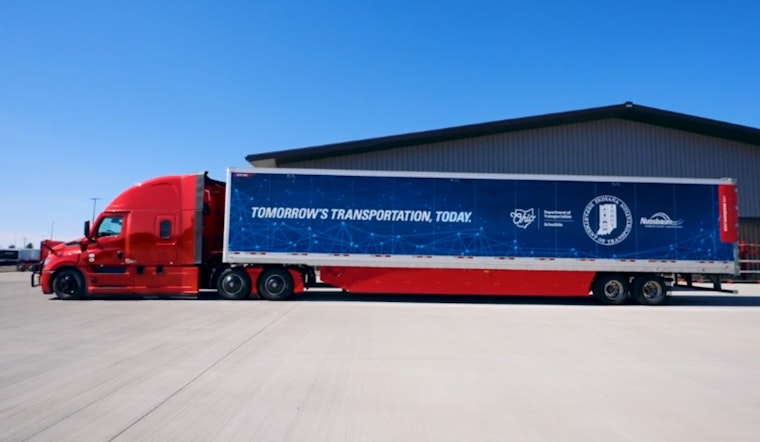
Three semi trucks packed with automation tech quietly joined the regular freight grind between Ohio and Indiana on Monday, hauling loads for Nussbaum Transportation under a new DriveOhio–INDOT pilot program. State officials say the rollout is designed to see how all that hardware holds up in real Midwest conditions while keeping professional drivers firmly in the driver’s seat.
According to a state press release cited by WKRC Local 12, three trucks equipped with automated driving technology are now moving freight between Columbus and Indianapolis through a partnership between DriveOhio and the Indiana Department of Transportation. The deployment is meant to test how the systems perform in rain, snow and heavy traffic, and to see how different levels of automation can be folded into everyday freight operations.
What These High-Tech Trucks Can Do
The Nussbaum rigs are loaded with safety features: automatic emergency braking, lane-keep assist, lane-departure systems and 360-degree sensors that warn drivers of hazards and can even block turning movements until the path is clear, officials said. Spectrum News reports that if a driver becomes unresponsive, the system is designed to bring the truck to a stop and flip on the hazard lights.
Why the Midwest Is the Real Test Track
Transportation leaders point out that most automated-vehicle testing so far has taken place in friendlier climates, where snow and sleet are more plot devices than daily headaches. Ohio and Indiana want hard data on how these safety features behave when the weather turns ugly, not just on sunny test tracks.
The effort is part of a multi-year initiative backed in part by an $8.8 million grant from the U.S. Department of Transportation, according to an Ohio Department of Transportation news release from ODOT.
Where This Pilot Fits in the Bigger Testing Picture
Officials are framing this run as the latest chapter in a longer I‑70 experiment, which has already included a truck platooning pilot with EASE Logistics and Kratos. The idea is to move in phases, from driver-assist systems to higher levels of autonomy, instead of jumping straight to fully driverless big rigs.
Industry reporting from April 2025 detailed how those earlier I‑70 tests provided baseline operational data and helped shape this next step in the rollout, according to Forbes.
What Comes Next on the I‑70 Experiment
For now, ODOT and INDOT say the focus is on collecting real-world data, tracking safety outcomes and deciding whether to expand the program or put out a formal request for proposals later this year. Nussbaum’s operations chief told state officials the company treats these systems as tools to support drivers and stressed that professional drivers will remain in control during the runs, according to Local 12.
Local and regional outlets, including WHIO, note that officials are going out of their way to stress this is still testing and safety research, not a sudden flip to driverless freight barreling down I‑70.





