

























































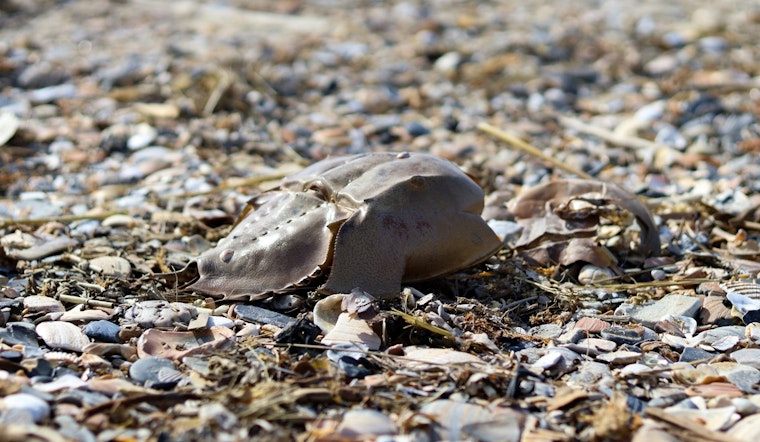
The Trump administration is staring down a new legal fight after federal regulators refused to give Endangered Species Act protections to the American horseshoe crab. The Center for Biological Diversity says that decision leaves a roughly 450 million year old species, along with the shorebirds, fisheries, and medical labs that depend on its eggs and blood, on shakier ground.
In a press release from the Center for Biological Diversity, the group said it has formally notified the administration of its intent to sue after the National Marine Fisheries Service declined to list the species under the ESA. The petition, backed by 25 partner organizations, flagged overharvesting, biomedical bleeding, and habitat loss as escalating threats along the Atlantic coast from Maine to Louisiana.
Federal finding
On Feb. 18, NOAA Fisheries issued a negative 90 day finding, concluding that the petitions did not present “substantial scientific or commercial information” indicating that listing the Atlantic, or American, horseshoe crab may be warranted. In its notice in the Federal Register, the agency noted that it had received related petitions in late 2023 and early 2024 and that it reviewed regional datasets before landing on that conclusion.
What conservationists have done so far
Conservation groups first pressed the National Marine Fisheries Service with petitions in late 2023 and early 2024. When the agency blew past earlier deadlines, the Center for Biological Diversity filed suit in January to force a preliminary determination, according to reporting. Local and national advocates say this new notice to sue is the next logical step now that NMFS has issued a negative finding. Earlier litigation over the timing of that decision was detailed by WBUR.
Why it matters
Horseshoe crabs are a quiet workhorse of coastal ecosystems. Their eggs provide critical springtime fuel for migrating shorebirds such as the rufa red knot, and their amebocyte rich blood has been used for decades to test medicines for bacterial contamination. The rufa red knot was listed as threatened in 2015, and that listing cited population declines linked in part to horseshoe crab overharvest and habitat loss, a connection documented by Audubon and in federal listings.
Numbers and trends
Recent data tell a mixed story along the Atlantic. The Atlantic States Marine Fisheries Commission reports coastwide bait landings of roughly 550,908 horseshoe crabs in 2024, while conservationists warn that bleeding for biomedical use and related mortality have climbed. Reporting and research indicate that the number of crabs bled for medical testing more than doubled between 2018 and 2023, and industry trackers and advocacy groups estimate that about 1.1 million crabs are bled or otherwise taken each year for biomedical and bait uses. The ASMFC overview and Smithsonian Magazine have both detailed recent biomedical trends.
Regulatory debate
Management of horseshoe crabs has become a long running flashpoint. The Atlantic States Marine Fisheries Commission has been revising its Adaptive Resource Management framework and has adopted new specifications in recent years, even as states and local advocates push harder for protections for spawning beaches. Conservation groups say some management options fall short of what is needed to address long term, range wide declines, and legal challenges have become part of the toolbox. Environmental organizations have chronicled the fight, including coverage from Earthjustice on recent Delaware Bay protections.
Legal fight ahead
The Center for Biological Diversity has framed its latest notice as a direct challenge to an agency decision it says ignores clear threats from overharvest, biomedical bleeding, and coastal habitat loss. Conservation attorneys argue that courts can require agencies to follow ESA timelines and to base decisions on the best available science. The Center’s January case pushed NMFS to issue a preliminary finding, and the group now says it is prepared to pursue a full legal challenge if the agency does not change course.
What to watch next
In the coming months, expect courtroom sparring and fresh public comment over harvest quotas, biomedical practices, and state level protections. At the same time, industry representatives and some researchers point to recombinant and synthetic alternatives to horseshoe crab derived reagents as a way to ease pressure on wild populations, a shift that Smithsonian Magazine has covered and conservation groups have been tracking.
For coastal communities and wildlife managers, the case is shaping up as a test of how federal law, interstate fisheries management, and medical industry practices intersect, and of whether courts or regulators will tighten safeguards for a species that has already survived hundreds of millions of years of planetary upheaval.





