

























































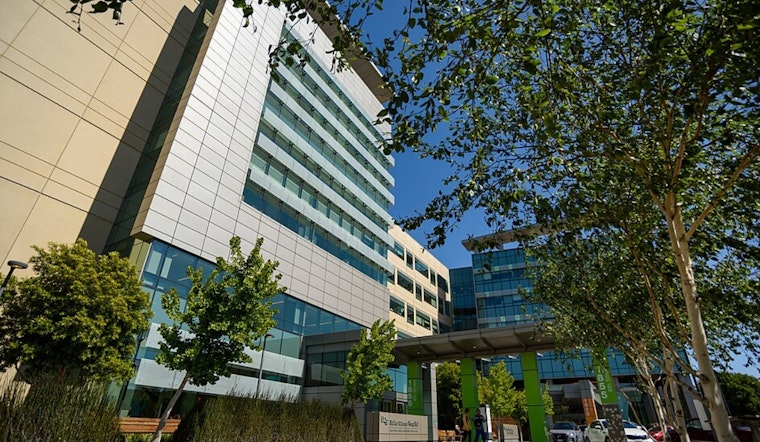
UCSF just landed an $824 million jackpot from the National Institutes of Health for fiscal 2025, a windfall set to turbocharge research across its medical and health schools and ripple through the Bay Area’s life sciences scene. University leaders say the money will fuel work on AI-driven diagnostics, next-generation cell therapies and a slate of infectious-disease projects.
Faculty brought in $824 million in NIH awards for the fiscal year running from Oct. 1, 2024, through Sept. 30, 2025, with the Schools of Medicine, Pharmacy, Dentistry and Nursing together accounting for about $811.9 million of that total, according to UC San Francisco. The School of Medicine alone secured roughly $724.2 million, according to the campus breakdown.
Independent tallies based on federal records back up UCSF’s place in the big leagues of NIH funding. Becker’s Hospital Review reports that UCSF ranked as the largest public recipient in 2025 and lists the School of Medicine among the most highly funded medical schools nationwide.
Where the money goes
News coverage of the university’s announcement spells out how some of that cash will be put to work, including AI tools aimed at spotting early neurological decline, protein-design research intended to sharpen cell therapies and smarter hospital monitoring systems. Those efforts sit alongside research focused on cancer, diabetes and infectious diseases such as tuberculosis, HIV and malaria, as highlighted by National Today.
Local economic ripple
All that research money does more than keep labs humming. It helps power a substantial regional industry. According to Biocom California, the Bay Area life sciences sector directly employed about 150,491 people and generated roughly $123.6 billion in economic output. A United for Medical Research analysis finds that every $1 in NIH support spins off about $2.56 in broader economic activity, meaning grants like UCSF’s reverberate well beyond campus gates.
Policy backdrop
The big announcement lands in the middle of a bruising policy fight over how federal research money is handled. In 2025, a federal push to cap reimbursement for universities’ indirect research costs at 15 percent triggered lawsuits and threatened to cut into the overhead that pays for lab space, compliance operations and other infrastructure. Courts ultimately blocked the cap and left negotiated rates intact, preserving the support that many institutions argue is necessary to keep clinical trials and large-scale research running, according to the Associated Press.
“Federal funding is indispensable to advancing medicine,” UCSF Chancellor Sam Hawgood said in a campus statement, emphasizing that NIH backing underwrites basic science, patient-care innovation and training for future researchers, according to UC San Francisco. For San Francisco, the latest batch of awards doubles as both a scientific statement and a steady economic heartbeat pulsing through labs, clinics and neighborhood businesses.




