

























































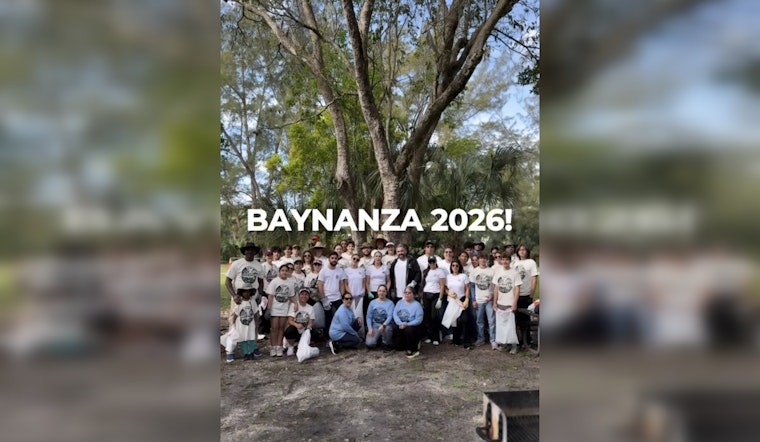
Last Saturday was not exactly a lazy day on the water for Miami-Dade. Neighbors, students and municipal officials fanned out across the county for Baynanza, the long-running Biscayne Bay cleanup that has become part environmental triage, part civic tradition. Volunteers lined shorelines and inland waterways, yanking out a startling mix of plastic, Styrofoam and micro-trash that otherwise heads straight for the bay. The strong turnout, organizers and county officials said, was encouraging, even as it showed how far the region still has to go to restore the bay’s health.
Across 33 sites, more than 3,000 volunteers showed up and, by media and county tallies, crews pulled more than 20,000 pounds of marine debris and trash, including microplastics. The Julia Tuttle Causeway and a shoreline in Biscayne National Park were among the dirtiest spots, with roughly 2,000 pounds and 1,700 pounds removed, respectively, according to Local 10.
Miami-Dade officials had actually been aiming even higher. The county planned for roughly 5,000 volunteers across the area and notes that Baynanza is now in its 44th year. Loren Parra, who directs the county’s Division of Environmental Resources Management, has stressed how much is on the line, pointing to county figures that put Biscayne Bay’s local economic impact at more than $64 billion each year, according to Miami-Dade County.
Grassroots Organizers On The Front Line
On the ground, much of Baynanza’s machinery runs through grassroots crews. According to VolunteerCleanup.org, the Julia Tuttle Causeway location was one of the sites the group helped run and one of dozens of Baynanza registration points the nonprofit lists. Co-founder Dave Doebler told Local 10 that seeing the mess up close can flip a switch for people. “Once they do, they immediately want to be part of the solution,” he said, explaining that organizers deliberately bring elected officials to the shoreline so they can see the problem firsthand.
Policy Fights Now Run Through Tallahassee
While volunteers filled trash bags, Florida lawmakers were wrestling with the upstream side of the problem. In Tallahassee this session, legislators debated a package of auxiliary-container bills that would reshape how single-use containers are regulated. The Florida Senate’s official bill page shows that CS/SB 240, filed by Sen. Ileana Garcia and aimed at creating a statewide Marine Debris Reduction Plan and a uniform ordinance template, died in the Senate Appropriations Committee on March 13, 2026. Environmental advocates had been watching the bill as a possible way to create a uniform state approach to plastic pollution, according to the Surfrider Foundation Florida.
Why Cleanups Are Not Enough
Miami-Dade’s own science and policy documents are blunt about the limits of feel-good cleanup days. Pick-up events alone will not fix Biscayne Bay. The county’s 2025 report card and related materials single out nutrient pollution as a major driver of seagrass decline and algal blooms. Sewage breaks, leaking septic tanks, fertilizer runoff and dirty stormwater all show up as recurring culprits, and county staff report they are developing a Reasonable Assurance Plan to address these water-quality impairments, according to Miami-Dade County.
Volunteers described Baynanza as a highly visible act of community care, a way to show that residents are not giving up on the bay. Organizers say they hope the sight of full trash piles will help keep pressure on officials to match frontline removal work with tougher rules and long-term infrastructure fixes. For those who want to plug in beyond the big annual event, organizers keep a running calendar of volunteer opportunities and registration details, according to VolunteerCleanup.org.





