

























































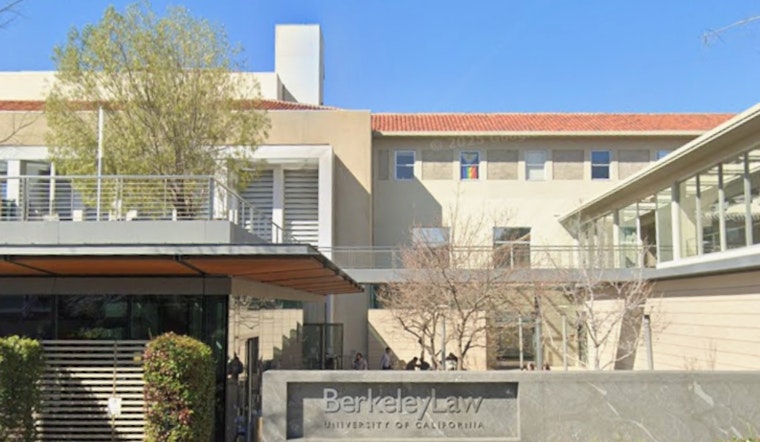
Inside a Berkeley Law classroom on Monday, students stood and applauded as a convicted Palestinian woman who attempted a car bombing spoke to them over video during a teach‑in billed as "Palestinian Political Prisoners Day." The remote speaker, Israa Jaabis, was convicted after a 2015 blast that wounded an Israeli police officer and was later freed in a 2023 prisoner exchange. A clip of the appearance, shared by student organizers, quickly spread on social media and sparked sharp reactions on and off campus.
The session appears on Berkeley Law's calendar as a one‑hour "Teach‑In: Palestinian Political Prisoners Day" in Room 170, organized by Berkeley Law Students for Justice in Palestine, according to the school's event listing. UC Berkeley Law describes the program as an opportunity to hear "about the experiences of Palestinian torture survivors and prisoners of conscience." The page notes that such events are open to law students, faculty and staff unless otherwise specified.
Video and Reaction
According to the New York Post, a video posted by student organizers shows attendees applauding as Jaabis addresses the room via video link. The outlet reports that the clip, which was shared by campus groups, circulated widely across social platforms and drew criticism from alumni and outside commentators. Organizers, for their part, have described the gathering as a forum for testimony and discussion.
The Speaker's Record
Jaabis was convicted after an October 2015 incident near Ma'ale Adumim in which Israeli authorities say she attempted to ignite a gas canister in her car; the resulting explosion wounded a police officer, according to The Jerusalem Post. The outlet reports that security services recovered handwritten notes praising "martyrs" and that Jaabis was released in November 2023 as part of a prisoner exchange following the October 7 attacks. Her virtual appearance in a U.S. law school classroom has now been folded into a broader, heated debate over who gets a platform and what that means for campus safety.
University Response
In a statement to the New York Post, a UC Berkeley spokesperson said the university has a non‑discretionary obligation to support the First Amendment in a content‑neutral manner. The paper reported the comment as critics of the event amplified the video online and questioned how far that free‑speech obligation should extend when controversial speakers are involved.
Legal Stakes
The controversy is unfolding against a backdrop of federal scrutiny. In 2025, the U.S. Department of Education's Office for Civil Rights opened probes into several universities, including UC Berkeley, over allegations of antisemitic harassment. The Department of Education has urged colleges to safeguard students' civil rights protections, and reporting by ProPublica and others has detailed how federal pressure has intensified campus battles over speech and safety.
What Organizers Say
Event organizers framed the teach‑in as a space to "hear about the experiences of Palestinian torture survivors and prisoners of conscience," using the language that appears on the official listing. Berkeley Law's events calendar names Berkeley Law Students for Justice in Palestine as the organizer and provides a contact email for the group.
The clash over Jaabis's appearance underscores a wider tension at Berkeley Law: student groups enjoy broad free‑speech protections, while some alumni and community members are increasingly calling for stricter limits on giving the mic to highly polarizing figures. That argument is unlikely to quiet down soon, as campus leaders, students and federal officials all weigh what, if anything, should change next.





