

























































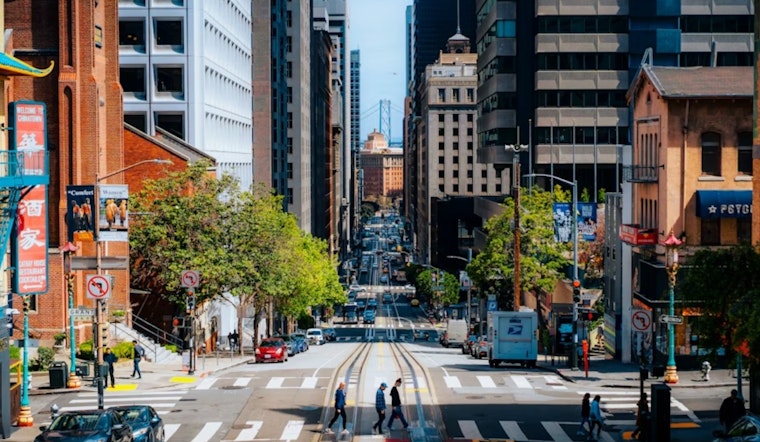
Downtown San Francisco can feel like two different cities depending on the day of the week. By midweek, the sidewalks, coffee shops, and elevators are buzzing. Then today rolls around, the crowds thin out, and plenty of office floors start to look like it is the week between Christmas and New Year, as workers finish the week from home instead.
Workplace data backs up the vibe shift. According to the San Francisco Business Times, downtown office attendance climbs to roughly 51 percent of pre-pandemic levels by Tuesday through Thursday, then drops well below that on Fridays. The Business Times coverage links that split directly to the hybrid schedules many Bay Area employers and teams have locked in.
Placer.ai's Office Index tells a similar story, finding that weekday visits to downtown office buildings still sit noticeably under 2019 baselines, with Fridays consistently logging the lightest foot traffic of the workweek. That gap between the midweek peak and the Friday slump has become a familiar pattern for landlords, transit planners and small businesses that depend on steady weekday crowds.
Why Fridays stay quiet
Analysts largely put the Friday fadeout on two forces working together, hybrid schedules and long commutes. The Bay Area Council's return-to-office tracking shows that many employers still expect most staff in the office Tuesday through Thursday, leaving Friday as the most common work-from-home day.
What it means for downtown businesses
That lopsided workweek squeezes lunch rushes and after-work crowds into fewer days, which makes it tougher for restaurants, bars and retailers to plan staffing and inventory around a predictable weekday baseline. As The Real Deal reports, Downtown San Francisco Partnership snapshots show work-hour visits still lagging 2019 levels, even as weekend and leisure visits have bounced back more quickly.
What officials and employers are trying
Property groups, city programs and some employers are experimenting with incentives, pop-up programming and targeted discounts to stretch activity across the full workweek instead of just three packed days. Hoodline coverage has highlighted data-driven moves, from lunchtime promotions to event programming built around office arrival patterns, backed by DoorDash lunch data.
For downtown merchants and transit agencies, the dilemma is straightforward but not simple: either find ways to nudge employers and teams toward a more balanced five-day rhythm, or keep adapting to a three-day workweek pattern that now shapes the city's recovery. The Friday quiet has become part of the new downtown reality, and it is one more factor local leaders and businesses are baking into their plans and programming.





