

























































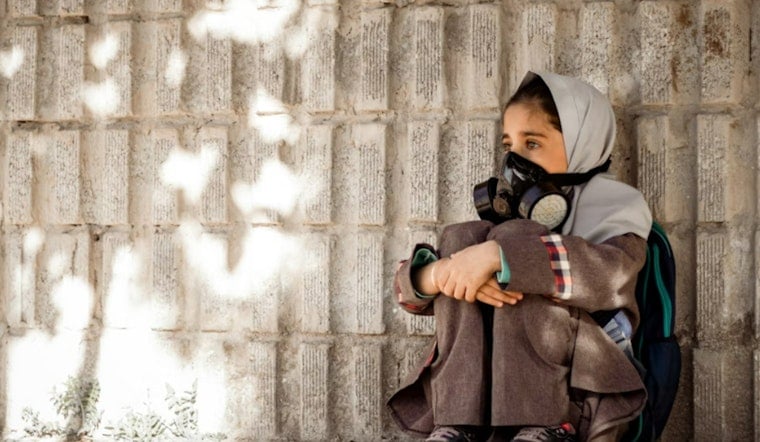
Breathing in central Indiana is officially a problem. A new air-quality report says the Indianapolis–Carmel–Muncie metro ranks near the top among the nation’s worst regions for particle pollution and hands out failing grades for both smog and soot. Findings from the American Lung Association, released this week, warn that hundreds of thousands of Hoosier children and outdoor workers are routinely exposed to unhealthy air. Public-health groups say the numbers should put serious pressure on state and federal officials to act.
What the report found
According to the American Lung Association’s 2026 State of the Air report, which analyzed monitoring data from 2022–2024, the Indianapolis–Carmel–Muncie region ranked 11th worst in the U.S. for year-round particle pollution (PM2.5) and 14th for short-term spikes. Marion County received F grades for ozone and daily particle pollution. The ALA’s state release says about 674,499 children in Indiana live in counties that received at least one failing grade for air quality. As reported by IndyStar, the rankings put the Indy metro among the nation’s most polluted areas for soot.
Smog, soot and your health
Ground-level ozone, commonly called smog, forms when vehicle and industrial emissions react with sunlight, while soot refers to fine particulate matter (PM2.5) produced by power plants, diesel engines, wildfires and other combustion sources, the EPA says. Both pollutants can trigger asthma attacks, heart attacks, strokes, preterm births and premature death, and children’s developing lungs make them especially vulnerable, as the EPA outlines in its particulate-matter guidance. Public-health researchers link long-term PM2.5 exposure to increased mortality and chronic disease in exposed communities.
Advocates push for fixes
The American Lung Association warned that federal policy shifts have weakened protections and urged regulators to "value the health of America’s children," saying in its release that "the current EPA has retreated from its public health foundation by rolling back clean air protections." Tiffany Nichols, the ALA’s Indiana advocacy director, said proposals for new data centers should be designed with communities and powered by renewable, zero-emission energy to avoid adding upstream pollution. The group recommended restoring safeguards and including health-damage estimates in economic analyses to better weigh the costs of pollution.
How to check the air
State officials direct residents to IDEM’s SmogWatch forecasts and to EPA AirNow for real-time readings and next-day forecasts. IDEM issues Air Quality Action Day advisories when ozone or PM2.5 are expected to reach unhealthy levels. On poor-air days, the most vulnerable, including children, older adults and people with lung or heart disease, are advised to limit outdoor exertion and use indoor HEPA filtration where possible. For local guidance and forecasts see IDEM and EPA AirNow.





