

























































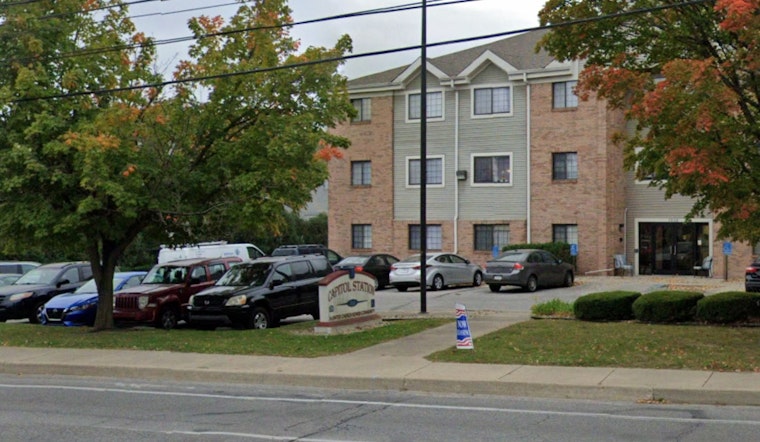
Capitol Station, a 50-unit senior community on Madison Avenue, just came out of a roughly $6 million top-to-bottom renovation, and the residents got the first look at their revamped homes on March 26. United Church Homes marked the grand re-opening with a celebration that showcased new kitchens and bathrooms, upgraded HVAC, refreshed electrical and plumbing systems, and a slate of accessibility and security improvements meant to keep older adults safely in place and shielded from rising market rents.
United Church Homes said the work is backed by a financing stack that combined a RAD for PRAC conversion with 4% Low-Income Housing Tax Credit equity. That pairing let the nonprofit pour more than $120,000 into each of Capitol Station’s 50 apartments. The organization’s release describes a full menu of interior upgrades, infrastructure repairs, accessibility tweaks and energy-efficiency measures. UCH’s president and CEO called the effort “an investment in dignity, stability, and opportunity” for residents, framing the project as more than a basic rehab.
What the work included
Coverage from WIBC 93.1 FM highlighted the ribbon-cutting at 7828 Madison Ave., where residents, officials and partners walked through freshly renovated units and upgraded common areas. Longtime resident Lona White told attendees she is thrilled with the new look, saying she loves “all the colors, all the furniture, everything.” The station also underscored that the goal was to preserve and stabilize existing affordable homes, not clear them out for something pricier.
Why the financing matters
The Capitol Station overhaul hinged on a federal tool that has become increasingly important for aging senior properties. HUD’s RAD for PRAC option allows eligible Section 202 PRAC communities to shift to long-term Section 8 contracts and tap private investment for substantial repairs, a structure that HUD says is meant to protect residents while preserving affordability. For Capitol Station, combining RAD for PRAC with tax credit equity is what made the nearly $6 million renovation financially workable.
Local context
Capitol Station’s redo lines up with Indianapolis’ broader push to preserve affordable housing instead of watching it quietly disappear. City leaders have leaned on tools such as PILOT agreements and tax-credit financing to keep existing units in the mix. Reporting by WRTV has detailed recent PILOT approvals and other incentives aimed at senior and affordable projects around the metro area. Preservation advocates point out that stitching together federal programs with those local supports is often the only way nonprofit owners can fund deep, building-wide renovations like this one.
In its release, United Church Homes credited the Indiana Housing and Community Development Authority, Marble Cliff Capital, Parkway Construction and First Financial Bank as key partners in financing and construction at Capitol Station, and noted that Cogir Management USA will handle day-to-day operations. At the March 26 event, the organization offered guided tours and refreshments and stressed that the energy-efficiency upgrades should translate into lower utility bills over time. In a tight Indianapolis housing market, the project stands out as a rare preservation win for low-income seniors who want to stay rooted where they are.





