

























































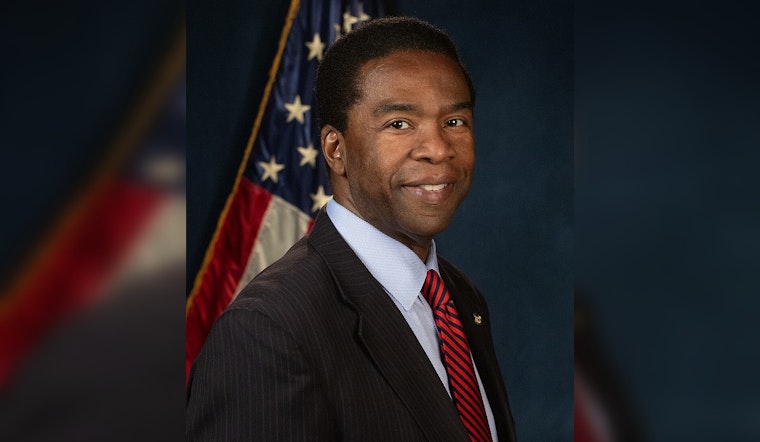
Alvin Brown, former NTSB vice chair and one-time mayor of Jacksonville, has taken his fight with Washington back to court, claiming a racially motivated purge of Black officials at independent federal agencies. His new discrimination lawsuit landed just days after the White House rolled out its 2026 Economic Report of the President, which features a headline-grabbing chapter on the economic impact of diversity, equity and inclusion (DEI). What started as one personnel dispute is now colliding with a national showdown over policy, law and politics.
White House's Economic Case Against DEI
On April 13, the White House released the 2026 Economic Report of the President, and the Council of Economic Advisers carved out an entire chapter titled "The Economic Consequences of DEI." According to the White House, the council dug into industry, state and firm-level data to estimate how hiring and promotion choices tied to DEI have affected productivity. The release presents those number-crunching efforts as part of the administration's broader case for scaling back DEI programs in federal agencies and among government contractors.
What the Report Actually Claims
Inside the report, the Council of Economic Advisers writes, "These results imply that DEI promotion has led to inefficient management," then backs that up with econometric models. The council's estimates say DEI-linked promotion patterns shaved roughly 0.34% off gross domestic product compared with a hypothetical no-DEI world and cost the economy about $94 billion in 2023, figures laid out in the council's analysis in the Economic Report of the President. The document labels the findings as economic analysis, not legal guidance, and pairs them with recommendations for changes in policy and federal contracting.
Brown's Lawsuit: Alleged Pattern of Removals
As reported by Bloomberg Law, Brown filed Brown v. DeLeeuw in the U.S. District Court for the District of Columbia on April 14, adding an equal-protection claim to his ongoing fight. The complaint argues that his May 2025 removal from the NTSB vice chair role was part of a broader, racially biased pattern and contends that roughly 75% of Black commissioners at independent agencies have been removed under the current administration. Brown, represented by Democracy Forward, is seeking reinstatement and other relief. His lawyers say the wave of removals cannot be chalked up only to routine partisan turnover and are asking a judge to decide whether race was an unconstitutional factor.
Administration Response and Legal Stakes
The White House has maintained that the president acted within his legal authority and insists that performance, not race, drove the personnel decisions. The administration has asked a judge to toss Brown's new claims by arguing that statutory limits on removing certain officials are themselves unconstitutional, according to AP News. That argument arrives as courts, and in related disputes the Supreme Court, reassess how much control presidents can wield over so-called independent agencies. Brown's case is slotting directly into that larger constitutional fight about agency independence and presidential power.
Jacksonville Connection and Local Angle
For Jacksonville, this is not just another inside-the-Beltway legal skirmish. Brown is a former mayor of the city, and Hoodline previously covered his first challenge to the NTSB removal; see our earlier coverage in Brown's first lawsuit over the ouster. The latest filing has also made the TV rounds: FOX 26 Houston ran a segment this week tying Brown's complaint to the fresh White House economic report. For local readers, the case puts a familiar political name back in the middle of a national legal drama.
Conflicting Evidence in the DEI Debate
The White House economics team is not the only voice in this debate. A peer-reviewed January 2026 study published in the journal Humanities and Social Sciences Communications found that many DEI initiatives are viewed as generally effective by students and educators, highlighting how contested the empirical record remains. That kind of academic counterpoint is likely to feature in arguments from civil-rights lawyers and scholars as Brown's case moves ahead. See Nature for details.
What to Watch Next
Brown's suit is captioned Brown v. DeLeeuw, No. 1:26-cv-01249 (D.D.C.), and was filed April 14. The federal government is expected to move quickly to dismiss or narrow the claims, a step that could make the early rounds of briefing the most important stage in the short term, according to Bloomberg Law. Beyond Brown's personal bid for reinstatement, the case will probe how courts treat high-profile policy rhetoric and whether economic research cited by the White House has any weight in a racial discrimination claim. We will update this story as motions are filed, hearings are set and the court signals where it is heading.





