

























































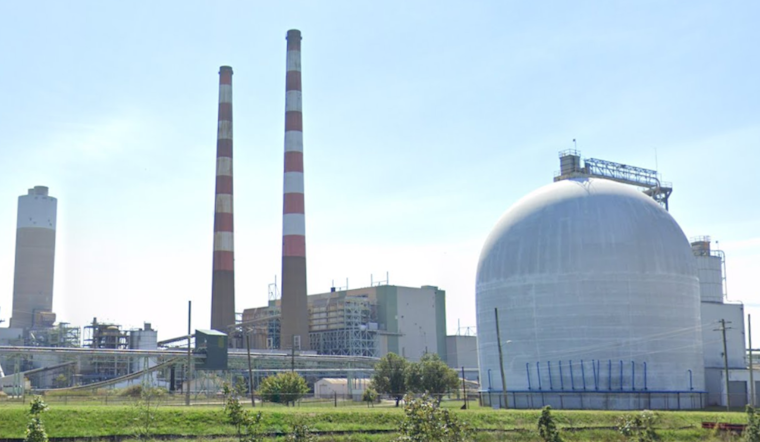
A proposal to turn the Morgantown Generating Station on the Potomac River into a massive data campus would, by the developer’s own estimates, chew through more power than the entire city of Baltimore. TeraWulf insists that building new on-site generation with large battery banks would let the property send power back into the regional grid instead of just soaking it up, a pitch that has sharply divided state officials, residents, and federal regulators.
What the company says
On Feb. 2, TeraWulf announced a deal to acquire the Morgantown plant and outlined an ambitious redevelopment that would scale the site from roughly 210 MW online today toward about 1 GW of combined generation and data center load. According to a Feb. 2 press release from TeraWulf, the plan starts with an initial development phase of roughly 500 MW, with a later expansion toward 1 GW and the addition of battery storage that could support grid needs.
The company has framed the project as a brownfield redevelopment that would repurpose an existing fossil plant site into what it calls “energy-advantaged compute capacity,” according to an SEC 8-K filing by TeraWulf. In corporate-speak, that means a data campus built directly on top of its own power source rather than relying entirely on the wider grid.
How TeraWulf pitches the grid benefits
The proposed Chesapeake Data Campus would pair that generation with large battery arrays, and TeraWulf says the complex could at times deliver excess electricity into PJM Interconnection’s multistate network. The Baltimore Banner reports that TeraWulf has promoted 500 megawatts of battery storage as a way to bolster supply and has been in contact with Maryland environmental regulators about the concept.
According to the Banner, Maryland Department of the Environment Secretary Serena McIlwain sent a letter in December offering expedited help on permitting. That kind of fast track is attractive for an energy-hungry project in a tight market, and it also raises the stakes for whether the company can convince regulators that the site is a net benefit, not a liability, for the grid.
Watchdogs and community groups object
Consumer advocates and local groups are far from sold. In a motion filed with the Federal Energy Regulatory Commission, Public Citizen and other intervenors asked for more time to review the transaction and argued that the company’s application failed to disclose details about additional generation capacity it plans to add at the site, according to Public Citizen.
Separate reporting shows that watchdogs have also zeroed in on ownership questions, including concerns about a disclosure that Google holds a stake in TeraWulf. Coverage in Utility Dive lays out those objections at FERC, with critics arguing that basic technical information, future buildout plans, and the implications of that tech giant connection are not fully spelled out in the record.
Why PJM and others are worried
PJM Interconnection and outside analysts have been sounding the alarm about rapid data center growth across the 13-state power market, especially from artificial intelligence and high-performance computing campuses that run hot around the clock. That growth is already straining capacity and driving policy shifts to secure a new generation on a tight timeline.
Bloomberg reported that PJM has launched an emergency push to line up roughly 15 GW of new capacity to keep up with surging demand. Environmental and consumer advocates warn that the huge price tag for new transmission and generation is landing on ratepayers, and policy analysis groups have documented how large new loads are already reshaping planning decisions and capacity auction outcomes across the region.
Local unease and practical hurdles
Closer to the ground, neighbors at recent Charles County meetings have raised alarms about air quality, noise, and what they describe as limited transparency from the company. They have also highlighted a more mundane but stubborn logistical problem: the Morgantown site sits roughly 15 miles from the nearest major natural gas transmission line, according to federal mapping, which would complicate any large gas buildout.
The Baltimore Banner reports that residents say outreach so far has been sparse, and that unanswered questions about new pipelines and cleanup of legacy coal pollution remain at the center of local opposition. For a community that has already lived with the environmental footprint of a coal plant, trust is proving to be one of the scarcest resources in the room.
Regulatory road map
The sale itself is pending before the Federal Energy Regulatory Commission under docket EC26-58, a proceeding that has quickly become the main arena for technical, market, and ownership fights over the project. The independent market monitor for PJM, Monitoring Analytics, has filed answers and protests in the docket arguing that TeraWulf’s claims of being “net-positive” for the grid do not spell out the timing, cost, or magnitude of the power it would actually supply, according to a filing by Monitoring Analytics.
Those arguments land on top of a stack of motions and protests from consumer advocates, including a detailed challenge from Public Citizen, and together they could push FERC to demand more information or schedule a full hearing before approving the deal.
What happens next is procedural but high-impact. FERC must decide whether the Morgantown sale passes the narrow public interest test required for a Section 203 transfer. If that hurdle is cleared, state permitting for site cleanup and any gas supply work would follow, and county-level decisions will be shaped by how intense community pressure becomes. Until those pieces fall into place, Morgantown stands as a closely watched test of whether an on-site, fossil-heavy data center model can coexist with Maryland’s climate goals and a PJM grid that already feels stretched.





