

























































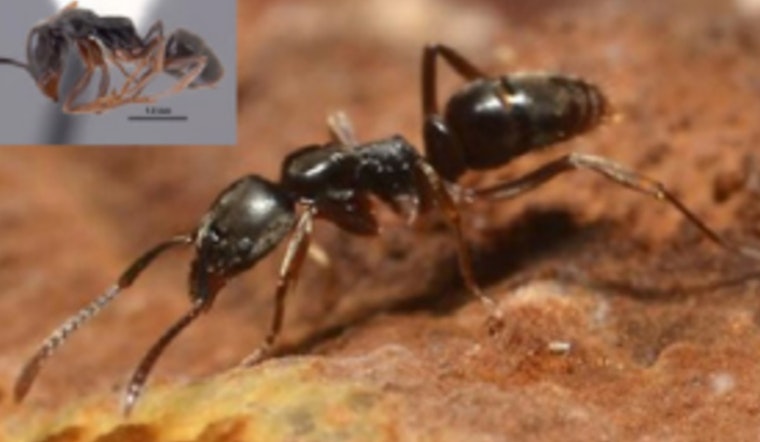
The Asian needle ant, a tiny venomous stinger with a big reputation, has officially turned up in Tennessee, including several spots inside Great Smoky Mountains National Park near Knoxville. Park staff and researchers say the invasive ants can deliver a sharp sting that brings intermittent pain and swelling and, for a small percentage of people, potentially life-threatening anaphylaxis. Because they like to nest in leaf litter and rotting wood, they are both easy to overlook and frustratingly hard to control.
According to the Knoxville News Sentinel, University of Tennessee researchers have traced multiple Asian needle ant finds to trailheads, visitor centers, and lower elevation areas of the park. The paper quotes UT entomologist Karen Vail saying sting victims in the region have reported everything from mild redness to severe hives and intense allergic reactions. Local biologists told the outlet they expect encounters to climb as the weather warms and foraging activity picks up.
The U.S. Forest Service describes Asian needle ant workers as shiny, dark brown to nearly black, with lighter orange-brown legs and antennae. They measure about 0.2 inches and carry a clearly visible stinger. Instead of forming obvious mounds, they typically nest under logs, stones, or mulch, which helps explain how they can slip into parks and suburban yards without drawing attention. The Forest Service notes that the ants are not especially aggressive, but individual stings can be medically serious for people who are highly sensitive.
Why scientists are worried
A study in Ecology and Evolution documented Asian needle ants at several heavily visited locations inside Great Smoky Mountains National Park. Researchers warned that the invader can displace native seed-dispersing ants, which play a key role in moving wildflower and other understory plant seeds around the forest floor. If native ants get pushed out, that seed-moving system can change, potentially reshaping how those plants reproduce over time.
Health risks for people
Extension specialists report that Asian needle ant venom can trigger stronger allergic reactions than many familiar stinging insects. North Carolina State Extension advises people who are hypersensitive to insect venom to be especially cautious around suspected infestations.
The U.S. Forest Service cites studies from the ants’ native range showing that about 2.1% of sting victims experienced anaphylaxis, a severe and potentially life-threatening reaction. The agency recommends seeking immediate medical help if symptoms such as trouble breathing, swelling of the throat, dizziness, or fainting appear after a sting.
When you’ll see them and how to avoid stings
Local research compiled by the University of Tennessee indicates that Asian needle ant foraging in this region peaks in mid to late summer, roughly July through September. That means hikers, gardeners, and backyard cooks are most likely to cross paths with them during those months.
The University of Tennessee Extension outlines straightforward precautions. Suggestions include checking gloves and boots before use, steering clear of leaf litter and rotting wood where possible, and shifting mulch or firewood piles away from patios, play areas, and other spots people use often. The same factsheet also summarizes bait treatments that have reduced foraging activity when applied in mid-summer.
If you find them
Online distribution maps now show Asian needle ants in roughly 20 states. Records and occurrence maps for the species can be viewed on AntMaps.
If you suspect you have found Asian needle ants, experts recommend taking clear, close-up photos or saving a preserved specimen, then contacting your county extension office or state entomology lab for identification. In Tennessee, residents can reach out to their local extension office or the University of Tennessee entomology program for confirmation and advice on next steps.





