

























































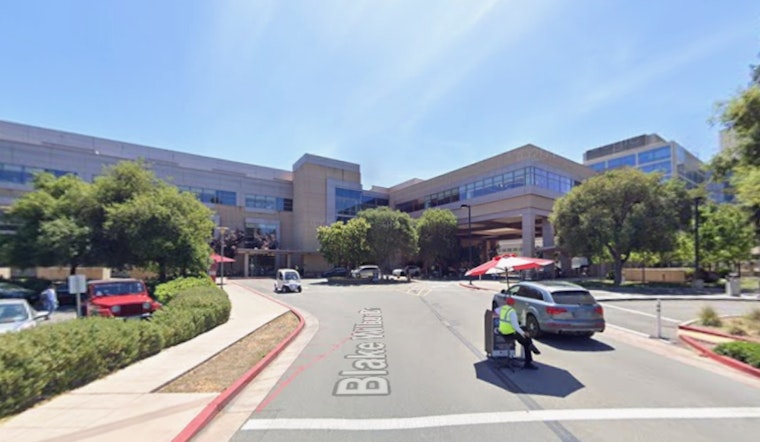
Stanford Medicine has cut the ribbon on a compact proton therapy suite at its Palo Alto cancer center, offering highly targeted radiation that is designed to spare nearby healthy organs. Instead of constructing a massive new bunker, the hospital tucked the system into an existing treatment vault using a miniaturized accelerator and an upright patient chair. Hospital leaders say the first patients could begin treatment as early as this summer.
Stanford Medicine is pitching the project as a model for bringing proton therapy into more hospitals, with the official opening held yesterday. “For our patients, the key is being able to eliminate their cancer without causing unacceptable collateral damage,” Dr. Billy Loo told Stanford Medicine.
The new room pairs Mevion Medical Systems’ MEVION S250‑FIT accelerator with Leo Cancer Care’s MARIE upright positioning chair. Instead of swinging a giant gantry around the patient, clinicians rotate the patient in the chair to line up the proton beam. In a press release, Mevion Medical Systems said the ultracompact system can fit inside a standard linear‑accelerator vault and is FLASH‑research ready.
A volunteer demonstration in the new suite drew local TV coverage, where pediatric oncologist Dr. Susan Hiniker highlighted the potential to protect growing tissues and reduce long‑term side effects for young patients. As reported by ABC7 San Francisco, Stanford leaders also noted that the smaller footprint could make proton therapy practical for Bay Area families who previously had to travel long distances for this kind of care.
What Makes the System Different
The key engineering shift has two parts: Mevion’s compact cyclotron shrinks the accelerator hardware, and Leo’s MARIE chair lets staff move the patient through treatment arcs while the beam source stays fixed. In a press release, RaySearch Laboratories said Stanford will use its RayStation software to plan advanced proton arc treatments and upright sessions aimed at protecting nearby organs.
Who Benefits and What’s Next
Clinicians say the setup is particularly promising for tumors near the brain, spinal cord or heart, and for children, where limiting radiation to healthy tissue is crucial. Stanford and Mevion plan clinical work to test FLASH dosing and upright workflows, and Stanford expects to begin treating patients as early as this summer while other centers prepare to roll out similar systems in the coming months, according to Mevion.
Referrals and scheduling will run through Stanford Medicine’s usual channels; patients and providers are directed to contact the Stanford Medicine Cancer Center for details. The installation represents a significant expansion of proton therapy options in the Bay Area and could spare patients lengthy travel while making highly targeted radiotherapy easier to access close to home.





