

























































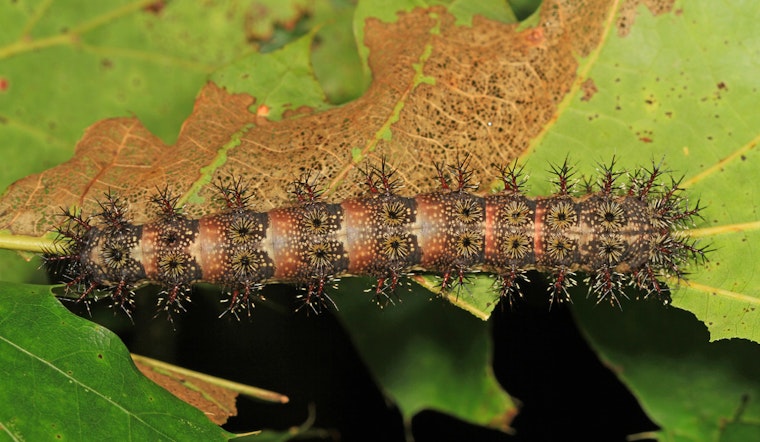
Spring festival season in New Orleans came with an unexpected opening act this weekend: stinging buck moth caterpillars dropping out of the oak trees. Several attendees reported painful "stings" after the fuzzy, spiny larvae tumbled onto blankets, shoes and shoulders, turning lazy afternoons into quick lessons in first aid. Instead of reaching for bandanas and beads, some festivalgoers were grabbing tape and ice packs.
What Buck Moth Caterpillars Are
Buck moth larvae are large, dark caterpillars covered in branched, hollow spines that connect to venom glands. Those spines can puncture skin and release an irritating toxin, according to the LSU AgCenter. Extension services and local outlets report that the insects are most active in spring and often fall from oak trees during warm, breezy days, putting anyone relaxing under live oaks at higher risk, as noted by KATC.
If You’re Stung
Medical experts advise treating a sting by pressing adhesive tape gently onto the affected area to lift out any broken spines, then washing the spot with soap and water and applying a cold compress, according to guidance from University Medical Center New Orleans. An oral antihistamine or a topical steroid can help ease itching and swelling, and anyone who develops throat tightness or trouble breathing should seek emergency care immediately. "It causes immediate pain, and it can last anywhere from 24 hours to even a week or more," Jayme Necaise of the Audubon Insectarium told Yahoo.
Where To Be Careful
Most of the recent complaints have centered on oak-lined festival routes and parks, where the caterpillars have a direct drop zone onto unsuspecting crowds. French Quarter Fest workers told reporters they had not seen caterpillars in Jackson Square, according to WWL-TV. Still, tour guides and vendors say they are warning visitors to keep blankets and towels off the grass, scan for fallen larvae before sitting down and keep pets away from leaf litter.
Why It Keeps Happening
Buck moth numbers fluctuate from year to year and can reach serious nuisance levels in urban oak stands. Researchers say outbreaks are shaped by environmental conditions and habitat factors that are not yet fully understood, according to a review in the Journal of Integrated Pest Management. When populations spike, the larvae can strip individual oaks of foliage and "rain" from the branches, creating a short but intense contact risk for anyone below.
If you are heading to outdoor events over the next few weeks, you may want to suit up like a cautious local: long sleeves, a wide-brim hat and closed shoes, plus a quick check of picnic gear and pet paws after a walk. If a sting comes with breathing trouble, swelling of the face or throat or any other severe symptoms, call 911 or go to the nearest emergency department immediately.



