

























































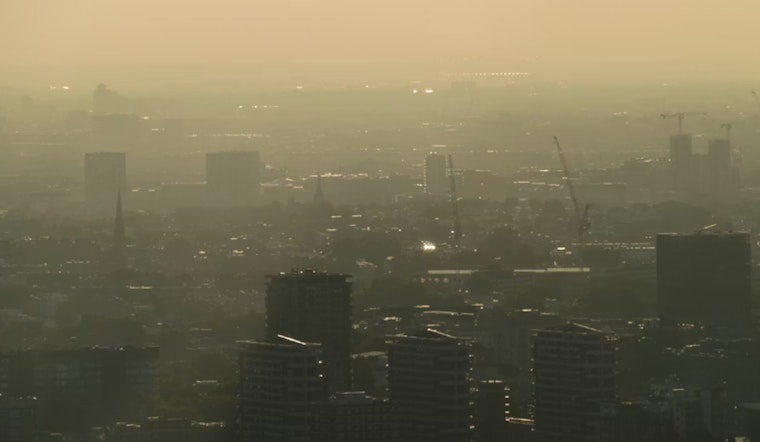
Salt Lake City's summer smog saga has a new twist. On Tuesday, the Trump administration's Environmental Protection Agency signaled plans to pull back the Northern Wasatch Front's "serious" nonattainment classification for summertime ozone. The move would reverse a late-2024 upgrade and could ease federal permitting and control obligations for some industries in and around the capital. Public-health advocates counter that summertime ozone is still a clear threat for people with asthma and for outdoor workers who cannot simply stay inside on bad-air days.
According to documents described by The Salt Lake Tribune, EPA officials have signaled an intent to withdraw or "revote" the serious classification for the Northern Wasatch Front, the airshed that includes Salt Lake City and its nearby suburbs. The reported action comes after petitions and litigation from state officials and industry groups that objected to the tougher rules tied to a serious label. Paperwork reviewed by the outlet indicates the change would roll back requirements that were scheduled to kick in after the reclassification.
This is not the first time the agency has taken a step in that direction. EPA previously rescinded federal guidance on Clean Air Act Section 179B demonstrations and, on March 5, 2025, agreed to reconsider its finding that the Northern Wasatch Front failed to meet the 2015 ozone standard. In a press release, Administrator Lee Zeldin said, "Americans should not be harmed by other countries that do not have the same environmental standards we have in the United States." As outlined in an April 7, 2025, news release from the EPA, reconsideration specifically includes a fresh look at Utah's demonstrations about international transport and its modeling choices.
What this would change
If the rollback is finalized, dropping the serious tag would spare Utah from immediate requirements to submit a more stringent State Implementation Plan and from several permitting triggers that come with a higher pollution classification. Under a serious classification, facilities that emit 50 tons per year or more of ozone precursors can be treated as major sources, and new or modified sources can face offset requirements and Reasonably Available Control Technology obligations. Those details, along with the timelines for SIP submittals, are laid out in the Federal Register rulemaking that finalized the earlier reclassification, which spells out the technical and compliance consequences for Utah.
Local reaction
Environmental and public-health groups told reporters the move would undercut progress on reducing summertime ozone and would harm residents with respiratory disease, again calling the pollutant a clear public-health threat. Industry groups and some state officials, by contrast, cast the plan as a needed correction to modeling and international transport assumptions that they say overstated Utah's role in driving high-ozone days. As reported by The Salt Lake Tribune, that divide is likely to fuel another round of public comment and litigation.
Legal implications
The reclassification that moved the Northern Wasatch Front into serious status was issued in late 2024 and has already been the subject of legal challenges and a judicial stay, so many of the stricter requirements never fully took effect. EPA has told the courts it will reconsider the rule and provide status updates as it reviews additional analyses, a process that could prompt fresh petitions from states, industry, and environmental groups. The Federal Register docket and related filings make up the technical record that will matter in any future courtroom fights.
Whatever the outcome, the move lines up with broader agency shifts this year, including reconsideration of the Good Neighbor interstate-transport rules and changes to how EPA quantifies health benefits from air-pollution limits. National reporting has highlighted those policy changes as part of a wider deregulatory agenda, and environmental groups warn they could weaken protections that have historically produced measurable public-health gains. Local officials, businesses, and advocacy organizations say they will be watching the formal rulemaking process and court filings closely in the weeks ahead.





