

























































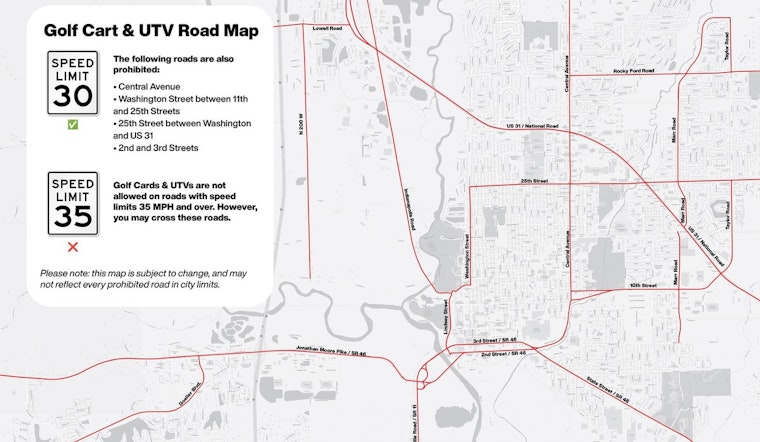
Columbus drivers will soon be sharing their neighborhood streets with golf carts and utility task vehicles, thanks to a new city ordinance that kicks in June 1, 2026. The law lets properly equipped and insured carts roll on city streets posted at 30 miles per hour or less, shuts them out of several major corridors, lays out driver age, equipment and behavior rules, and sets escalating fines for people who push their luck.
In a May 21 post, the Columbus Police Department shared an interactive map and FAQs laying out the new rules. That post also directs owners to the city’s dedicated guidance for these vehicles.
The Common Council drafted the ordinance, which will be written into the municipal code as Chapter 10.70 and take effect June 1, as summarized on the City of Columbus. City officials say the measure is meant to strike a balance between neighborhood access and safety on busier streets.
What the Ordinance Requires
Under the new code, golf carts and UTVs must be outfitted with headlights, taillights, brake lights, a horn, turn signals, rear reflectors, working brakes, a rearview mirror, seatbelts and a slow‑moving vehicle emblem. Operators must carry proof of insurance, have a valid driver’s license, and be at least 16 years and 180 days old, according to the City of Columbus. The ordinance also requires vehicles and drivers to follow normal traffic laws, and limits their operation to 30 miles per hour on city streets.
Where You Can (and Cannot) Drive
The city will allow carts only on streets posted at 30 miles per hour or less. They may cross prohibited routes, but only at perpendicular intersections. They are explicitly barred from Central Avenue, Washington Street between 11th and 25th, 25th Street between Washington and U.S. 31, Goeller Boulevard between SR 46 and the west entrance to Tipton Lakes Boulevard, and all state roads and highways, including 2nd and 3rd Streets, according to the City of Columbus. The map posted by police highlights the main roads where carts are not allowed and shows residential corridors where limited operation is permitted.
Penalties and Enforcement
Violations come with escalating fines: 150 dollars for a first offense, 200 dollars for a second, and 300 dollars for a third or later violation. Those violations can lead to impoundment and a ban on future operation on city streets, and enforcement will be handled by the Columbus Police Department, as laid out in the City of Columbus. Repeated unsafe operation can lead the city to revoke the right to operate entirely and require payment of fines, fees and storage charges before an owner can reclaim an impounded vehicle.
Supporters told council members the measure borrows from models used in nearby towns and will formalize what has already been informal neighborhood use. Some residents countered that older carts might need expensive upgrades to meet the new standards, according to coverage of the council discussion. Local News Digital reported on the ordinance’s passage and the police department’s push to get owners ready before the June start date.
Owners should also be aware that the ordinance includes an indemnification clause that puts liability on operators, and it allows the Board of Public Works and Safety to grant narrow exemptions for specific times or purposes. Expect police to increase education efforts and targeted enforcement as the policy rolls out next month. Anyone unsure whether their vehicle is up to code is urged to consult the city’s guidance and the full ordinance from the City of Columbus and the City of Columbus.




