

























































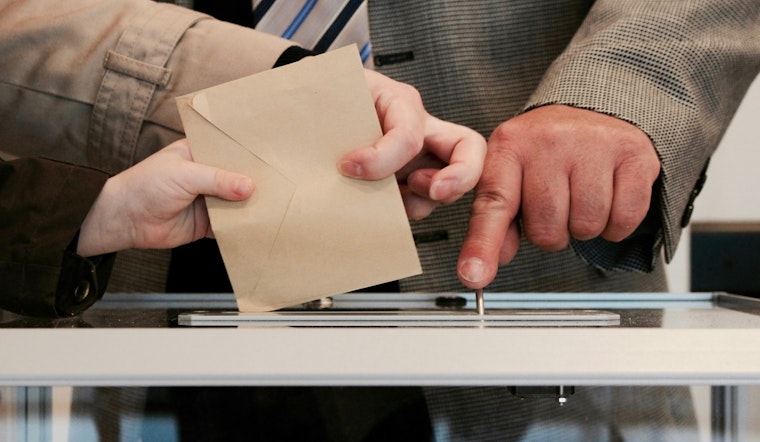
A tiny blank line on a ballot envelope packed an outsized punch in Lake County's primary last Tuesday. Indiana's new rule that mail-in voters must date their return envelopes cost dozens of residents their votes, county election officials say. Staff flagged 28 returned mail ballots as invalid, a sliver of the total, but big enough that local leaders are sounding the alarm about what could happen in November if voters are not clearly warned. Many of those rejected ballots came from Democratic voters whose envelope affidavits were either missing a date or included the wrong one.
Lake County officials reported mailing about 2,386 absentee-by-mail ballots and receiving back roughly 1,879. Of those, 28 were tossed under the new requirement, which works out to about 1.5% of mail-in voters, according to election leaders. The breakdown: 11 envelopes had no date at all, five were dated earlier than the ballot could have been mailed, six listed the election date in both required date fields, and one had a date that staff could not decipher. Officials also said some envelopes came back with the wrong year written in. Two voters whose ballots were flagged showed up at the election office on May 5, fixed the problem, and ultimately voted in person, according to the Chicago Tribune.
What the law requires
The return envelope for an absentee-by-mail ballot includes a sworn affidavit in which the voter attests that they completed the ballot and sealed it. State law requires that affidavit to be both signed and dated by the voter. That date is not just a courtesy. It is written into statute as a formal part of the ballot envelope and one of the factors that determines whether the ballot is accepted. The full language appears in Indiana Code §3-11-4-21.
How counties handled it
Lake County election director Michelle Fajman did not mince words about the new requirement, calling it "terrible, terrible, terrible" and warning that a simple dating mistake on an envelope should not be what keeps a valid voter from having a say. Across the county line, Porter County deputy election director Tara Graf told reporters her office did not see the same volume of date-related problems in the primary. Officials in both counties noted that signature issues can often be cured, but the date rule comes with fewer ways to fix errors, a limit that local election staff say only lawmakers can change, according to the Chicago Tribune.
How voters can fix it
Voters whose absentee ballots are rejected for a missing or incorrect date are not automatically shut out. The Secretary of State's office says any voter in that situation may appear before the county election board by 5 p.m. on Election Day, request an ABS-21 cure form, and then cast a regular ballot in person, in line with the state's guidance from the Indiana Secretary of State. The same statutory framework that makes the date mandatory also spells out the county's responsibility to issue the paperwork that lets that voter cast an in-person ballot. Officials urge anyone unsure about how they filled out their envelope to contact their county board of elections as soon as possible.
Local leaders say the episode is a textbook example of how a small paperwork detail can have very real consequences at the ballot box. With the November elections on the horizon, they are pushing for clearer instructions to voters and closer scrutiny from lawmakers and county boards, who will be watching to see whether the same pattern repeats across Indiana.





