

























































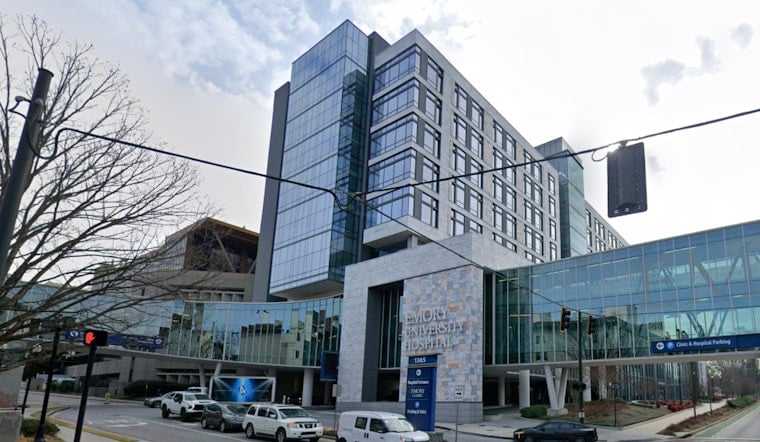
Emory University Hospital has quietly rolled out a major new player in the fight against respiratory bugs: a 10-bed airborne isolation research unit built to watch how viruses move from person to person indoors, in real time.
The unit will enroll volunteers in tightly controlled studies that test what actually works to stop spread in shared spaces, from masking and ventilation to filtration and air disinfection. Researchers say the first project will zero in on influenza and is scheduled to kick off in June.
According to a report from 95.5 WSB, Dr. Seema Lakdawala, co-director of Emory's Center for Transmission of Airborne Pathogens, described the new unit as the first in the United States that is specifically dedicated to studying human-to-human transmission of respiratory pathogens. WSB notes that the 10-bed research clinic will keep close tabs on volunteers while scientists measure airborne virus and test which interventions most effectively cut off transmission.
How the studies will work
Emory's Center for Transmission of Airborne Pathogens says the program will rely on tightly controlled human transmission and challenge models that let researchers capture infectious aerosols and see how different interventions change the risk of spread.
Emory News described a recent study that used a Modular Influenza Sampling Tunnel to collect live influenza virus from the air during controlled infection trials, tying together symptoms, viral load and airborne shedding in a clinical setting. The team plans to lean on those same methods as it moves into the new unit.
Emory's experience and safety record
The new space does not come out of nowhere. Emory has long run specialized isolation and biocontainment units and is part of the national network of regional special pathogen centers. Its Serious Communicable Diseases Unit treated Ebola patients in 2014 and regularly backs up responses to high-consequence infectious diseases.
Emory Healthcare's newsroom recently noted that the hospital received patients for monitoring after a cruise-ship outbreak, a reminder that the institution is already set up for highly specialized infectious-disease care. Emory Healthcare reports that those units are built for careful monitoring and sample collection, experience that carries over to the new research ward.
Volunteers and safety
Researchers say volunteers will be carefully screened and then closely watched once enrolled, using protocols modeled on earlier controlled-infection work that place participant safety and regulatory oversight at the center of the design. Study teams say participation will follow strict ethical review and safety standards.
People interested in learning more or signing up can find contact information through the Center for Transmission of Airborne Pathogens "Get Involved" and contact page. CTAP Emory provides details for prospective volunteers.
The new airborne research unit positions Emory to shift from purely laboratory findings to highly controlled, real-world tests of practical tools for cutting airborne risk. The results could eventually shape how health agencies, employers and building managers prepare for respiratory-virus seasons to come. Emory and the research team have not yet released a full timetable beyond the planned June influenza study, with more specifics expected as protocols open and recruitment starts.





