

























































Shawn Montgomery is getting another shot at holding one of the country’s biggest freight brokers to account.
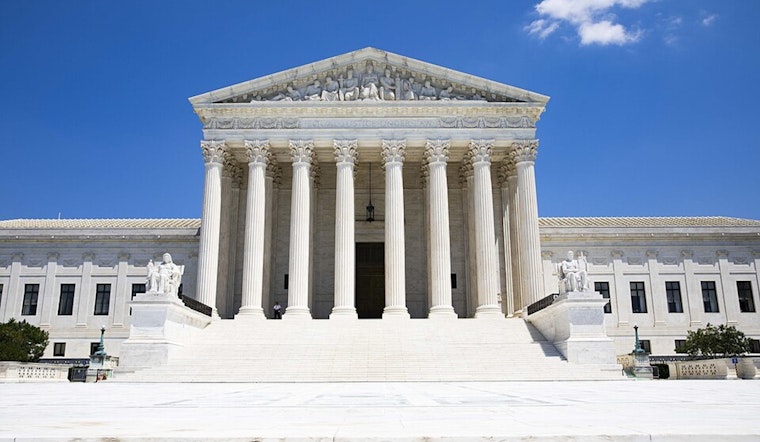
The U.S. Supreme Court on Thursday unanimously cleared the way for Montgomery to sue freight broker C.H. Robinson over a 2017 Illinois highway crash that cost him part of a leg. The ruling gives the severely injured trucker a legal opening against the nation’s largest freight broker and could shake up how brokers, carriers and insurers spread risk on routes running through the Chicago region and far beyond.
Court records identify the driver as Yosniel Varela‑Mojena and the carrier as Caribe Transport II, and describe how a tractor‑trailer veered off the road in December 2017 and slammed into Montgomery’s legally parked truck, causing catastrophic injuries, including the partial amputation of a leg, according to the U.S. Supreme Court. Montgomery sued the driver, the carrier and C.H. Robinson, arguing the broker negligently picked an unsafe carrier and was vicariously liable because of its relationship with Caribe.
What the court said
The high court unanimously held that Montgomery may press his state‑law claims against the broker, rejecting C.H. Robinson’s broad preemption argument and keeping his negligent‑selection theory alive, as reported by The Associated Press. Montgomery’s lawyers say the trucker had been cited for careless driving months before the crash and that Caribe had been involved in at least three wrecks over roughly five months. More than two dozen states filed briefs backing Montgomery’s safety‑focused position.
The dispute resolved a split among federal appeals courts and was watched closely by commentators at SCOTUSblog, who tracked how far the justices might let state‑law negligence claims reach into the world of freight brokerage.
Industry response
C.H. Robinson pushed back after the ruling, issuing a statement that stressed brokers do not own or operate trucks, that they rely on federal licensing, and that a patchwork of state tort rules could inject uncertainty into national supply chains. The company framed its stance in a press release that urged Congress to favor targeted federal reforms and tougher enforcement by the Federal Motor Carrier Safety Administration, rather than expanding state‑level liability for brokers.
Industry analysts and trade reporters have warned that a win for Montgomery could prompt brokers to tighten carrier vetting, steer more loads toward large fleets and pass higher insurance and freight costs through the system. Any ripple effects would be felt from small local haulers up to the biggest national shippers.
Law in play: preemption and the safety exception
At the legal core is 49 U.S.C. § 14501(c), a provision of the Federal Aviation Administration Authorization Act that generally wipes out state laws that are “related to” a broker’s prices, routes or services, while preserving a safety carve‑out for state motor‑vehicle regulation. Legal explainers note that the fight turns on how broadly courts read that safety exception and whether negligent‑selection claims fit inside it. Background on the statute and the earlier circuit split is laid out by the Legal Information Institute.
The Supreme Court’s guidance will shape whether this decision opens only a narrow lane for certain crash victims or significantly expands potential exposure for freight brokers across the country.
What this could mean locally
In and around Chicago, where freight traffic is a fact of life, the ruling raises the prospect that injured plaintiffs will increasingly look to state courts with claims that spotlight brokers, not just drivers and carriers, on the busy routes feeding into Illinois highways.
Transportation lawyers told Trucking Dive that the short‑term impact is more likely to show up in contracts and vetting procedures than in a sudden flood of jury trials. Over time, though, shifts in how insurers and brokers assess risk could influence which carriers get work on key regional lanes.
The Supreme Court’s ruling does not declare brokers liable for Montgomery’s injuries. It simply lets his state‑law negligence claims move forward to be tested in court, instead of being tossed out at the start, as The Associated Press notes. How trial judges, juries and the freight market respond will determine whether this ends up as a one‑off victory for a badly injured trucker or the opening chapter of a broader shift in freight‑broker accountability.





