

























































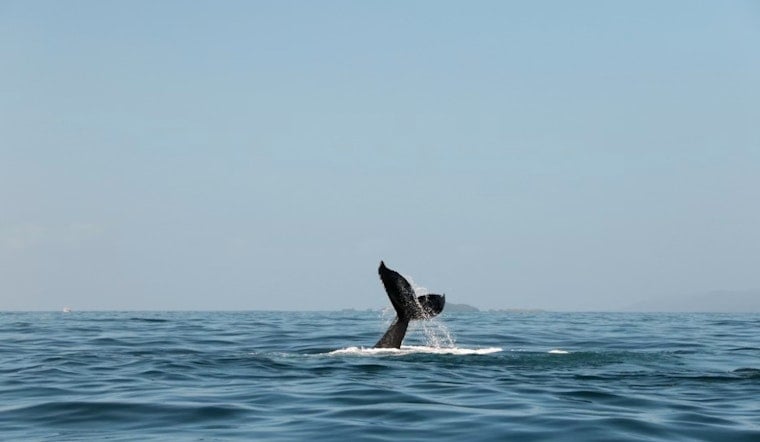
San Francisco Bay has just switched on an AI-powered whale-detection network that is supposed to give ferry pilots and ship captains early warning when large whales enter busy lanes. Officials and researchers say the system is meant to help prevent deadly ship strikes, after an unusually high number of gray whales were found in Bay waters this season.
How The New Network Works
The setup pairs FLIR thermal cameras with WhaleSpotter machine vision software that looks for whale blows and heat signatures, creating near continuous coverage even at night. According to UC Santa Barbara’s Benioff Ocean Science Laboratory, automated detections are checked by credentialed marine mammal specialists before any alerts go out, then are posted on the Whale Safe tracker for mariners to use. The first fixed camera is installed at a U.S. Coast Guard site on Angel Island, and a second node is slated for SF Bay Ferry’s MV Lyra so the system can function as a moving detection platform.
Why The Bay Has Become More Dangerous
A February press release from The Marine Mammal Center reported 26 strandings in the Bay Area last year, 21 of them gray whales, with a substantial share classified as probable vessel strikes. NOAA Fisheries and local scientists have warned that the eastern North Pacific gray whale population has dropped sharply in recent years, which makes every individual loss more significant for recovery work, and the agency has been leading efforts to coordinate ship strike mitigation along the West Coast. Researchers cite changing Arctic feeding conditions and warming ocean waters as reasons hungry whales are moving into nearshore and Bay waters where they now overlap with heavy ferry and cargo traffic.
Early Tests And Real-Time Alerts
Project leads say the first hours of testing brought a rush of detections and helped them dial in alert thresholds. “Suddenly to have a full sense of how much whale activity is in this space honestly put me a little bit on edge,” Benioff lab director Douglas McCauley said, as reported by AP News. Automated flags are reviewed by observers, then relayed by radio to ferry operators and the U.S. Coast Guard’s Vessel Traffic Service so captains can slow down or adjust course when whales are present.
What Comes Next
Officials want to extend coverage to other strategic points, such as the Golden Gate or Alcatraz, and to work detections into operator training and voluntary speed reduction programs. The new network is intended to complement efforts like the Marine Mammal Center’s Whale Smart operator training, and it arrives as policy conversations continue in local forums, including Save Willy Bill proposals that call for stronger Coast Guard coordination. Scientists and mariners say the most realistic way to reduce strikes is a blend of real-time detection, informed captains, and tactical speed changes during high-risk periods, per Hoodline.





