

























































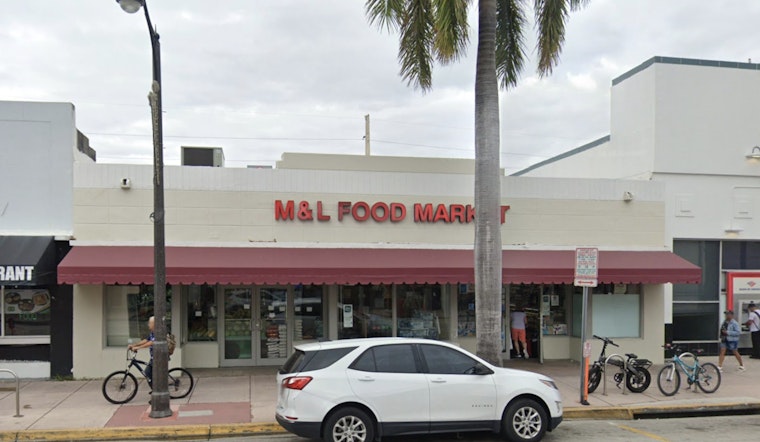
A Miami Beach grocery is one inspection away from losing the right to accept new food deliveries after state officials said they found moldy produce, live roaches and a laundry list of food-safety failures in its kitchen and deli. The violations triggered stop-use and stop-sale orders that have much of the store's ready-to-eat operation effectively on ice until the mess is cleaned up.
Inspection found mold, roaches and stop-use orders
On May 11, Florida Department of Agriculture and Consumer Services inspector Pedro Llanos visited M & L Food Market at 7446 Collins Ave. and issued stop-use orders on “all processing and open foods.” According to the Florida Department of Agriculture and Consumer Services report, the inspection turned up an orange sporting white, mold-like material and live roaches hiding behind prep tables in the kitchen and deli. The inspector also found the kitchen handwash sink had no hot water and set a reinspection for on or about May 25 to see if the violations get fixed. The department warned that if a pest problem continues, tougher restrictions could follow.
Deli and kitchen failures spanned basics to hot-holding
The inspection detailed a grab bag of basic food-safety lapses along the deli and service lines. Deli slicers had been left uncleaned for more than four hours. Nine packs of deli meat had no date marks. A container of dry breading was sitting out at room temperature. Cutting boards were scored with deep grooves that could not be properly sanitized.
Hot food was not exactly hot. Inspectors measured several items, including three breaded chicken sandwiches, a ham-and-cheese sandwich and a pot of beef stew, sitting at unsafe temperatures between 89 and 94 degrees. Employees were also seen skipping handwashing before putting on gloves. According to the Miami Herald, those missteps led to on-site discarding of unsafe food along with a series of stop-sale and stop-use orders.
Receiving ban could follow
The written notice from the state pulled no punches: “If evidence of pest infestation is observed on the next inspection, a Stop Use Order will be issued on all receiving areas of the establishment and the establishment will no longer be allowed to receive additional food items.” The department also advised that if violations are not corrected by the reinspection date, the store could face administrative fines and suspension or revocation of its food permit. The Florida Department of Agriculture and Consumer Services inspection lays out what must be addressed before inspectors come back.
Penalties and the law
Under Chapter 500 of Florida law, the agency can impose fines, embargo or destroy adulterated food, and suspend or revoke food permits when public health is in jeopardy. The inspection also flagged kratom products being sold without the proper hemp/kratom designation, a requirement tied to the Florida Kratom Consumer Protection Act. The legal framework is spelled out in Chapter 500 and in the specific kratom section of state law, both available through the Florida Senate and the Florida Senate.
What comes next
Inspectors are scheduled to return later this month to verify that the problems have been fixed, and the market’s ability to restock its shelves could depend on how that visit goes. The Miami Herald reports the grocer has until May 26 to restore hot water to the kitchen handwash sink and correct the other violations. If the issues are still festering when inspectors walk back in, the state has already warned it could cut off new food deliveries.





