

























































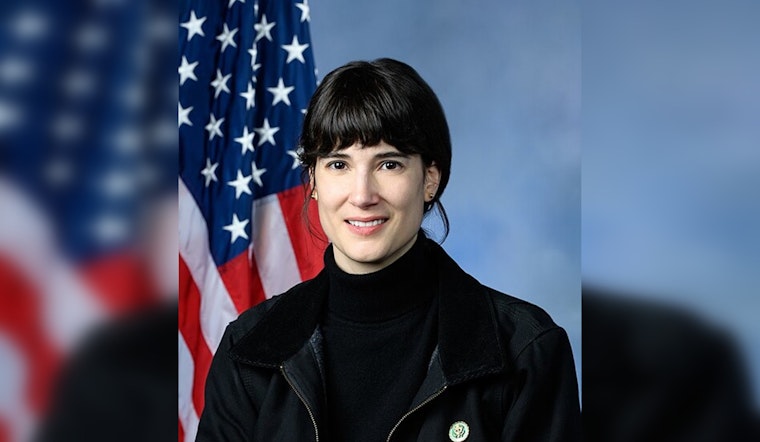
Rep. Marie Gluesenkamp Perez, the Democrat representing Southwest Washington’s 3rd District, is taking heat at home after backing a federal education bill critics have branded the “Don’t Say Trans” measure. She is defending the vote as a stand for parental involvement in decisions about a child’s name and pronouns, a rationale that has stirred strong pushback from LGBTQ advocates and some fellow House Democrats.
House Passage And The Democratic Breakaways
The U.S. House approved H.R. 2616, the PROTECT Kids Act, on May 20 by a 217–198 vote, with eight Democrats crossing the aisle to help Republicans pass it. The official roll call lists Henry Cuellar, Don Davis, Cleo Fields, Laura Gillen, Vicente González, Marcy Kaptur, Marie Gluesenkamp Perez and Eugene Vindman as the Democratic yes votes, according to the Office of the Clerk.
What The Bill Actually Does
Under the text of the bill, public elementary and middle schools that receive federal ESEA funds would have to obtain parental consent before changing a minor student’s gender marker, preferred name, pronouns or sex-based accommodations such as bathrooms or locker rooms, as laid out on Congress.gov. Opponents, including the Congressional Equality Caucus, say the proposal would also block federal funds from being used to teach or promote concepts that recognize transgender people and could pressure educators to disclose a student’s identity to parents in ways that endanger some children. The caucus has called those provisions “deeply harmful,” according to the Congressional Equality Caucus.
Gluesenkamp Perez Explains Her Yes Vote
Gluesenkamp Perez has framed her support as a parent-first choice, arguing that schools should not alter a child’s records without parents being brought into the loop. In a May 22 statement on her congressional site, she wrote that “a child’s name and sense of self are not small things” and argued that “the answer is to bring families in,” according to her office. Local coverage of her explanation is available from KOIN.
Collision With Local LGBTQ Politics
The vote is especially charged back home because Gluesenkamp Perez is listed as a member of the Congressional Equality Caucus, a pro-LGBTQ group whose leadership publicly condemned the House package. That split between caucus membership and floor vote has sharpened scrutiny in her politically competitive district. The membership page for the Congressional Equality Caucus shows her among its members even as the caucus chair warned about the bill’s risks.
What Happens To The Bill Now
After clearing the House, the bill was sent to the Senate, where it was received and referred to the Senate Committee on Health, Education, Labor and Pensions for consideration, according to QuiverQuant. If the Senate leaves it untouched, the measure will stall; if the committee takes it up, the bill could face amendments, hearings or both. Advocacy groups and education organizations say they are watching for any committee movement and are already talking about potential legal challenges if the measure advances.





