

























































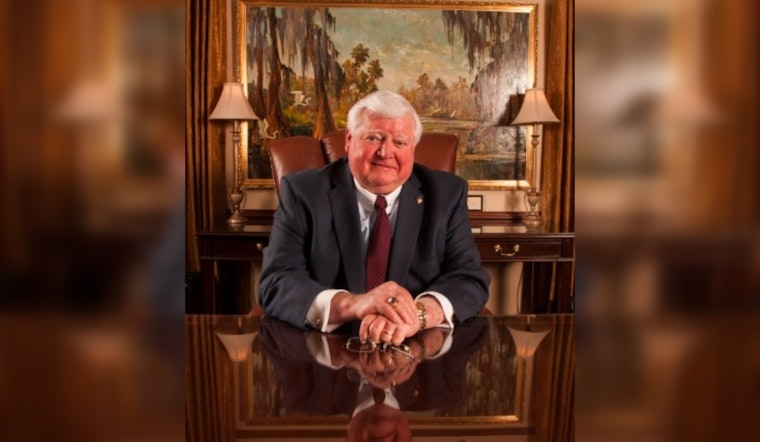
R. Fred Lewis, the former Florida Supreme Court chief justice who spent roughly two decades on the state's highest court, died Tuesday in Tallahassee at age 78, the court announced. The retired jurist will lie in state at the Florida Supreme Court rotunda on Thursday, June 11, followed by a memorial service in the court's courtroom on Friday, June 12.
According to Law360, the court said in a press release that Lewis will lie in state in the rotunda from 11 a.m. to 1 p.m. on June 11. The justices are expected to ceremonially receive the body, and Chief Justice Carlos Muñiz will deliver remarks as part of the observance.
Long Tenure On The High Court
Lewis was appointed to the Florida Supreme Court by Gov. Lawton Chiles in 1998 and remained on the bench until his retirement in 2019, including a term as chief justice from 2006 to 2008. According to the Florida Supreme Court's official biography, he spent about 20 years on Florida's highest tribunal, then stepped away from the bench to focus on teaching and civic education projects.
Educator And Access Advocate
On the court, Lewis launched the Justice Teaching initiative, which sends judges and lawyers into classrooms to help students understand how the legal system works, and he pushed for audits to improve courthouse access for people with disabilities. The Florida Bar noted that his work on civics and accessibility earned national recognition, including the Sandra Day O'Connor Award for Advancement of Civics Education.
Retirement, Turnover And The Court's Politics
Lewis retired in 2019 under the state's mandatory retirement rules, a departure that helped open seats later filled by new gubernatorial appointees, a shift observers say reshaped the court. As Florida Phoenix reported, the reconfigured court has receded from several earlier precedents. In an April 1, 2024 opinion, for example, the court in Planned Parenthood v. State backed away from prior rulings on the state privacy clause and left in place a 15 week abortion ban.
Lewis once summed up his public service philosophy as standing up for people in need, writing in his judicial application that he offered "eyes and ears that can not only see and listen, but also understand and hear human difficulties," a line Florida Phoenix recalled. Colleagues and legal education groups have praised his long record of civic outreach, and the court has said it will provide additional details about the public ceremonies ahead of the June events.



