

























































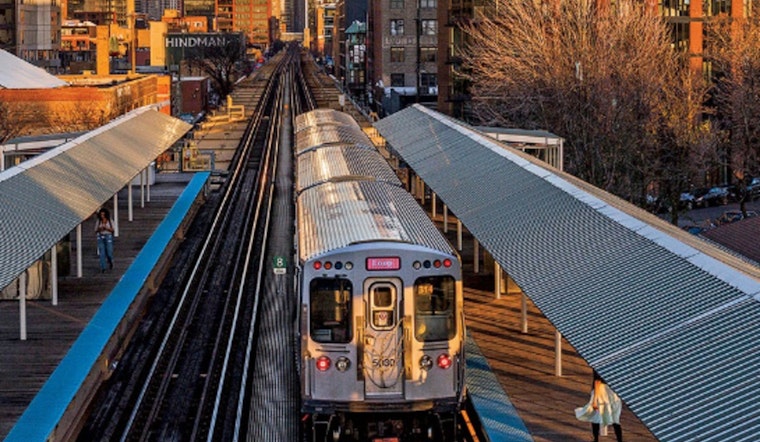
Chicago has spent the last five years betting that building more homes and shops near train stops can deliver both climate wins and neighborhood revival. A new report says that bet is starting to pay off, with real policy changes and bricks-and-mortar projects on the ground, yet a quick look at the map still shows wide bands of vacant land on the South and West sides where transit-friendly development was supposed to land.
What The Report Found
According to Elevated Chicago, the co-produced study finds solid movement on 22 of the city’s 42 equitable transit-oriented development recommendations, while also documenting sharp differences from neighborhood to neighborhood. Published May 18, 2026, the report notes that some historically disinvested communities are finally seeing momentum, but it concludes that stronger policies and more money are still needed to reach the Far South and Southwest Sides in a meaningful way.
Policy Shifts And On-The-Ground Wins
The city’s 2022 Connected Communities Ordinance widened incentives around transit, let developers build with fewer parking spaces near stations, and wove sustainable transportation bonuses into the zoning code, all in an effort to cut costs and shorten timelines for new projects, as reported by Block Club Chicago. A high-profile example is the Lucy Gonzalez Parsons Apartments, a 100-unit, all-affordable building that replaced a parking lot next to the Logan Square Blue Line stop, according to the CTA.
Follow The Money And The Coaching
City leaders have tried to back up the policy talk with actual cash. In 2023 and 2024, Chicago carved out roughly a $10 million ARPA-funded pool for an ETOD grant program and set aside about $1 million for technical assistance aimed at guiding emerging community-based developers through the process. Those figures appear in the Center for Neighborhood Technology’s reporting on Elevated Chicago’s work and the Elevated Works initiative.
Vacant Lots Still Loom Large
Numbers from the DePaul Institute for Housing Studies underline how steep the climb remains. As of July 2023, the city held roughly 8,800 vacant lots. About 43 percent of those city-owned parcels sit within a half mile of a CTA station, and most of those transit-adjacent sites are in predominantly Black neighborhoods. That pattern makes it harder to steer ETOD dollars to the places that advocates say need them the most.
Who Benefits, Who Gets Pushed Out
Authors of the report, along with housing advocates, caution that unless stricter anti-displacement rules are put in place, ETOD could echo previous growth cycles by funneling investment into wealthier, whiter communities while Black and Brown neighborhoods watch from the sidelines. That warning is a central thread in coverage from Axios Chicago.
Red Line Extension And NITA’s Big Role
Advocates see the Red Line Extension as a potential spark for new development on the Far South Side, if the right protections and policies show up with it. They are also keeping a close eye on the Northern Illinois Transit Authority, or NITA, which reshapes how the region funds and oversees CTA, Metra, and Pace, and could direct more capital toward projects next to transit stations if local rules and community safeguards line up. That broader funding and governance picture is laid out by MuniIntel.
What Comes Next
Over the next year, the playbook is not exactly a mystery. The report and advocates say Chicago will need to extend ETOD grant money beyond the initial pilot round, expand one-on-one technical assistance for smaller community developers, and lock in enforceable anti-displacement protections that preserve existing affordable housing. How seriously the city takes those steps will go a long way toward deciding whether ETOD becomes a real engine for equitable neighborhood investment or just another uneven development wave.




