

























































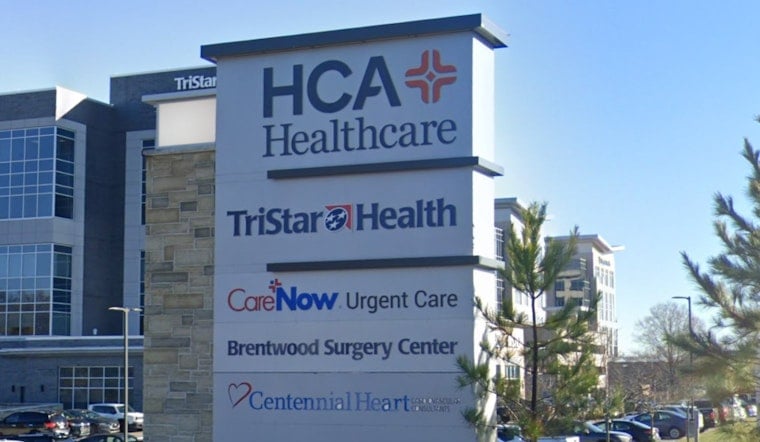
HCA Healthcare’s TriStar division has finally cleared a major legal hurdle and can move ahead with plans for a roughly $18 million freestanding emergency room in Lebanon, after months of back-and-forth at the state level put the project on pause and on the lips of just about everyone watching Wilson County development.
An appeal overturned state reviewers’ earlier rejection and reopened the path for the project to move through permitting, according to the Nashville Business Journal. Documents from the Tennessee Health Facilities Commission show the original certificate-of-need application (CN2506-022) was denied on Sept. 24, 2025, after regulators concluded it did not meet the state’s need criteria.
TriStar’s proposal, listed in state filings at about $18.06 million, outlines an 11-room, trauma-capable freestanding emergency department with on-site lab and imaging services. The company has identified a site near the intersection of Willard Hagan Drive and South Hartman Drive in Lebanon, and the facility is slated to operate as a satellite of TriStar Summit Medical Center. A release from Davidson County Source details the basic floor plan and TriStar’s pitch that the new site will bring full-service emergency care closer to local neighborhoods.
TriStar leaders and Lebanon officials have consistently framed the project as a response to Wilson County’s rapid population growth. State filing packets include hundreds of letters supporting the application, and Lebanon Mayor Rick Bell has told local outlets the ER should help absorb demand as new residential developments and a large Del Webb retirement community come online. That groundswell is visible in the public record: state filings list dozens of community comments in favor of the plan.
Part of a regional push for more ER access
The Lebanon project is arriving amid a broader wave of freestanding emergency departments across Middle Tennessee, as hospital systems look to cut drive times for suburban patients and extend their footprints without building full hospitals. Hoodline has recently tracked several parallel moves, including a $19 million TriStar freestanding ER approved in Murfreesboro and a $23 million Ascension Saint Thomas proposal in Mt. Juliet, pointing to a clear regional shift toward smaller, hospital-style ERs outside traditional campuses. That trend is evident in Hoodline’s TriStar ER approved in Murfreesboro coverage and its Ascension’s $23 million ER proposal in Mt. Juliet reporting, which detail how these sites are changing where people go in a crisis.
What critics and patients should know
Supporters argue that freestanding ERs can shave precious minutes off emergency trips, reduce crowding at main hospital campuses, and give growing suburbs faster access to higher-level care. Policy analysts, however, have flagged some financial and insurance wrinkles that tend to follow these projects. Freestanding ERs typically bill at emergency department rates, and depending on a patient’s insurance network, that can mean out-of-network charges in certain situations.
Federal protections under the No Surprises Act shield many emergency visits from the most painful surprise bills, but they do not erase every risk. Observers and state regulators are still watching how billing practices, insurer networks, and local competition evolve as more stand-alone ERs come online. The organization KFF offers a detailed primer on how the federal rules work and where gaps remain.
Next steps for the Lebanon site
With the appeal decided, TriStar can return to the nuts and bolts of getting the Lebanon facility built, including resuming permitting, refining site plans, and securing any remaining local approvals before construction starts. A formal ground-breaking schedule and opening date have not yet been made public; reporting so far notes only that the appeal removed the largest regulatory barrier in the project’s path. As the Nashville Business Journal observed, the decision effectively shifts the ER from a contested application back into the development pipeline.





