

























































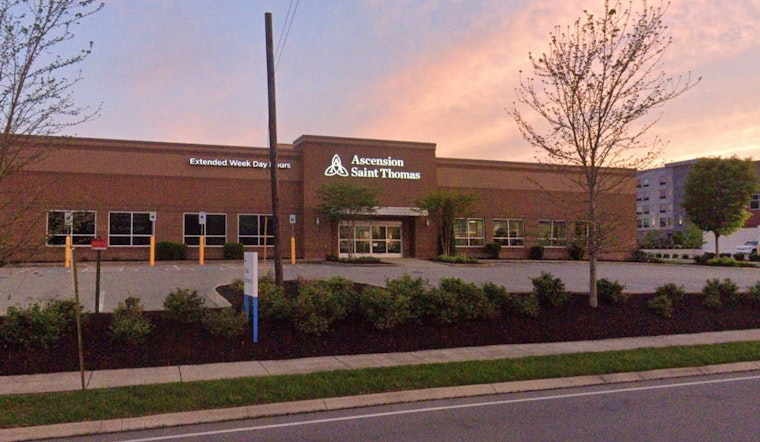
Mt. Juliet is on track to get its own round-the-clock emergency room, as Ascension Saint Thomas rolls out a $23 million freestanding ER that would bring hospital-style care closer to the booming eastern Nashville suburbs.
The standalone emergency department, detailed in recent planning filings with the city, would operate 24/7 and plug directly into Ascension’s broader hospital network. The proposal is the latest in a flurry of freestanding ER plans that are quietly redrawing the emergency care map across Middle Tennessee.
The project and its price tag were first reported in May by the Nashville Business Journal, which identified Ascension Saint Thomas as the developer behind the Mt. Juliet filing.
Another Piece in Ascension’s Regional Buildout
The Mt. Juliet plan is not a one-off. Ascension has been steadily planting flags for freestanding emergency departments across Middle Tennessee this year, signaling a clear strategy to meet patients where they live, not just where the main hospitals sit.
The health system has already filed plans for a $20.6 million freestanding emergency department in Fairview, according to Ascension Saint Thomas. In March, the system announced it had secured state approval for a separate $19 million freestanding ER in eastern Rutherford County, per Ascension Saint Thomas.
Read together, the filings show a clear pattern. Ascension is betting that patients will choose quick local access and outpatient convenience over a longer drive to a main hospital campus, as long as the ER services feel comparable.
Competition and a Certificate-of-Need Arms Race
Ascension is not the only player in this game. Other health systems are pushing their own freestanding ER projects, stacking up applications that all have to pass through Tennessee’s certificate-of-need process.
Reporting from Becker's Hospital Review notes that this wave of proposals is tied to two big forces, rapid population growth and a broad push toward convenient outpatient emergency care. That combination can quickly turn into a turf battle for patients, while also raising alarms about duplicated services and the financial hit to existing hospitals that still have to cover more expensive inpatient care.
What It Could Mean for Mt. Juliet
For people in Mt. Juliet, supporters say the pitch is simple. A freestanding ER inside city limits would cut drive times, reduce the stress of a longer rush to care, and offer on-site imaging and lab services that look and feel a lot like a traditional hospital emergency department.
Ascension’s announcement about the eastern Rutherford County project said that $19 million ER would create roughly 32 jobs, providing a snapshot of the economic case these centers are built on. The Mt. Juliet project has not detailed its own job count yet, but the example shows how developers are framing freestanding ERs as both health care access points and local job creators.
Critics in other communities have countered that these facilities can skim off the most profitable emergency cases, leaving nearby hospitals to shoulder a higher share of complex, costly care with fewer paying patients. That tension is exactly what state regulators are expected to weigh as they decide how many freestanding ERs a region can reasonably support.
For now, the Mt. Juliet plan is winding its way through city planning channels and state review. The Nashville Business Journal first reported the new project, and all eyes will be on how the certificate-of-need process treats yet another freestanding ER in a rapidly growing corridor.





