

























































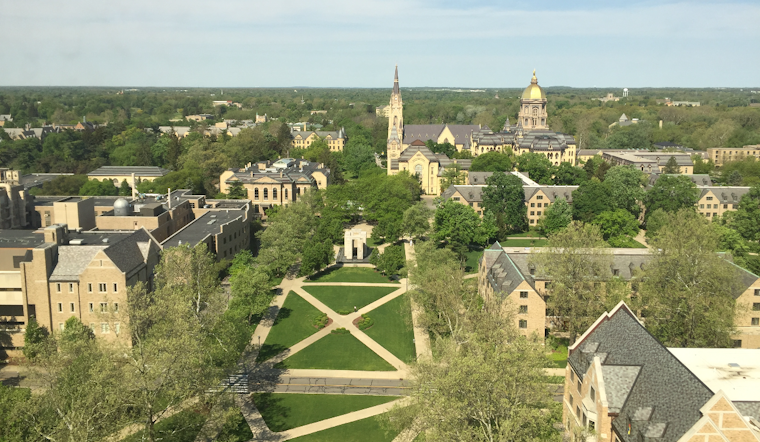
Notre Dame of Maryland University is racing to steady itself after years of shrinking enrollment and budget patches that barely cover the gap. The North Baltimore campus has leaned on big swings, including opening its doors to men, buying another university's graduate programs, and leasing campus land for a senior living complex, even as students air out dorm complaints. Administrators say the moves are buying time, but trustees and the incoming president are staring down a short list of fixes they need to pull off fast.
Financial Pressure And Falling Enrollment
Federal reporting shows Notre Dame’s headcount has slid in recent years, putting old-school tuition revenue under steady pressure, according to IPEDS. The university also reported a modest operating loss of roughly $90,000 last year, a relatively small number on paper that still signals the margin for error has just about vanished, as noted by The Banner. Those numbers have pushed leaders toward revenue experiments that would have been hard to imagine at a small Catholic college a decade ago.
Buying Students: The Integrative-Health Merger
In 2024–25, the university completed a change in ownership that folded the Maryland University of Integrative Health into Notre Dame’s footprint and added roughly 500 graduate students, according to a university release. The deal created a new School of Integrative Health and is spelled out in the university’s announcements and its 2025–26 graduate catalog, which details expanded largely online graduate offerings and that immediately boosted graduate headcount. University officials say the merger both broadens academic options and helps stabilize enrollment in the short term, even if no one is pretending it is a cure-all.
Senior Housing As A Revenue Play
Leasing land for a Brightview senior-living community is another deliberate revenue move. The planned development calls for about 170 units on campus property and is explicitly pitched as a way to create intergenerational programming and steady lease income. Catholic Review covered the January groundbreaking and noted President Marylou Yam’s argument that the project will bring internships and shared programming to students, while local business reporting has likewise described the deal as a practical source of non-tuition revenue. Administrators frame the partnership as a way to deepen community ties and reduce dependence on constantly growing tuition checks.
Housing Headaches And Reimbursements
The high-concept experiments have not solved the low-tech problems. Students reported repeated loss of heat and hot water in residence halls, and the university reimbursed residents between $50 and $500, according to reporting by The Banner. Those maintenance headaches have turned into a public-relations test for administrators who are already juggling enrollment questions and financial pressure. Campus leaders say they are working through repairs even as they push longer-term strategies to shore up the budget.
The Hard Math: Admits, Yield And Graduation
Enrollment trackers put NDMU’s total headcount at about 1,788 for 2024–25, with graduate students now outnumbering undergraduates, a structural shift that carries real budget consequences, per CollegeTuitionCompare. Federal IPEDS reporting shows the university’s six-year undergraduate graduation rate sits near 60%, while relatively high admit rates and a low yield make meaningful tuition growth difficult without steep discounting. That mix, smaller full-time undergraduate cohorts combined with heavier reliance on graduate and part-time enrollments, leaves the university with only a few realistic paths to sustained revenue growth.
New President Inherits A Fast Clock
Abagail Van Vlerah, who starts her presidency in July, will have to turn a series of ad hoc fixes into something that looks like a sustainable plan while rebuilding confidence among students, donors, and faculty, local coverage notes. In a statement quoted by the Daily Record, Van Vlerah said higher education must be "sufficiently nimble" and should pair mission with market-responsive programs. Trustees expect the new president to focus first on recruitment, retention, and the basic campus services that shape daily student life, from classrooms to residence halls.
What To Watch This Year
The coming academic year will test whether mergers, senior housing, and dual-enrollment experiments truly buy Notre Dame time or simply delay wider choices about program mix and campus operations. For students and neighbors, the questions are basic and immediate: whether the heat stays on, whether recruitment numbers finally turn a corner, and whether the campus’s mission can survive while the business model is reworked in real time.





