

























































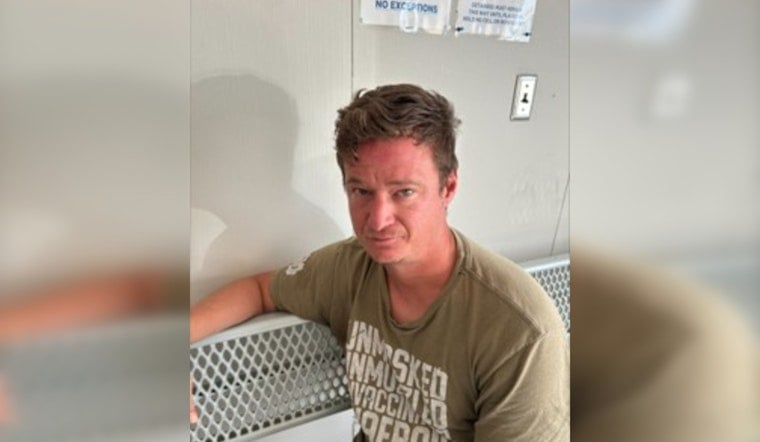
A Chauvin man already jailed on child sexual abuse material and bestiality charges is now accused of using artificial intelligence to create and share explicit images of children. Investigators say Joel Lyons Jr., 43, produced and distributed AI-generated depictions of child sexual abuse, leading to a fresh round of charges while he remains locked up at the Terrebonne Parish Criminal Justice Complex. Officials say the investigation is still active.
Rebooking and charges
Louisiana Attorney General Liz Murrill said special agents with the Louisiana Bureau of Investigation rebooked Lyons on June 16. He now faces 17 counts of Unlawful Deepfakes (production), five counts of Unlawful Deepfakes (distribution), and five counts of child sexual abuse material involving children under 13. Those alleged offenses come on top of the charges that followed his April 28 arrest, which include 20 counts of distribution of child sexual abuse material and 14 counts of sexual abuse of an animal.
Authorities say Lyons was taken into custody in Galliano, then transferred to the Terrebonne Parish Criminal Justice Complex, where his bond is set at $75,000, according to KQKI News.
How the probe began
Prosecutors say the case started with online tips and reports from digital platforms. Those alerts were reviewed by state agents, then sent for detailed digital forensic analysis, which investigators say eventually pointed to Lyons.
The National Center for Missing & Exploited Children has reported a sharp jump in suspected abuse tied to generative AI, with thousands of reports logged in 2023 and 2024 and a significantly higher volume in 2025. That trend highlights why law enforcement is now regularly running into synthetic imagery in child exploitation cases, according to the National Center for Missing & Exploited Children.
Federal enforcement and the legal landscape
At the federal level, prosecutors and lawmakers have begun treating nonconsensual AI-generated intimate imagery as a crime that can be charged under newer statutes. In May, federal prosecutors in Brooklyn used the TAKE IT DOWN Act to bring charges against individuals accused of publishing AI-generated pornography, signaling that the law is now being deployed in deepfake cases, according to the U.S. Department of Justice.
Local coverage has also documented early prosecutions under that statute and how courts are beginning to test the bounds of the law.
What happens next
Lyons remains in custody while state special agents and affiliated task forces continue to sift through digital evidence. Prosecutors say additional charges are possible as forensic work moves forward.
The investigation has involved the Orleans Metro Internet Crimes Against Children Task Force along with local sheriff’s offices, and authorities say the probe is ongoing, according to KQKI News.





