

























































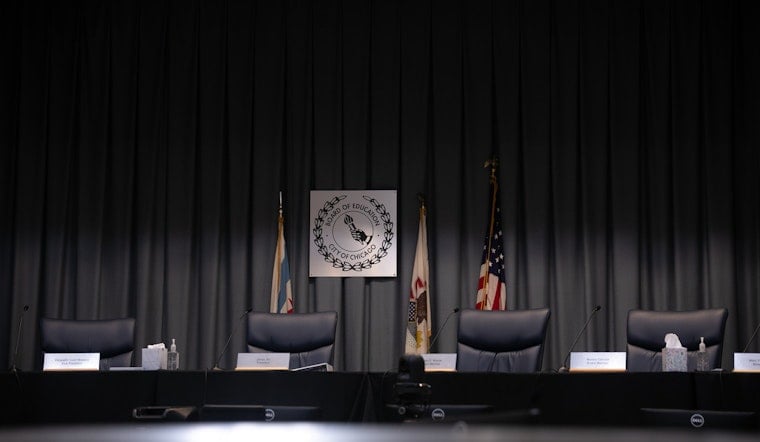
Chicago’s Board of Education has put a tenured teacher back on the payroll after district investigators concluded the educator pushed a third‑grade student in January 2024. Instead of firing the teacher, the board converted part of the leave into a 90‑day suspension and approved back pay, reversing an internal recommendation and igniting frustration from the student’s family while splitting the enlarged board.
Board vote and what it did
A Feb. 26 move to terminate the teacher fell just short. The dismissal needed 11 votes to pass but drew only 10, according to Chicago Board of Education records. With termination off the table, the board came back at its April meeting and adopted a discipline resolution that treated part of the teacher’s absence as a 90‑day suspension and restored pay, per the April action log. Those procedural records show the board ultimately rejected administrators’ recommendation to fire the employee.
The incident and the family's reaction
District documents and family accounts describe a January 2024 encounter in which the teacher pushed third‑grader Denym Jenkins out of the assistant principal’s office. Jenkins later developed a chronic back strain, and the teacher was placed on leave the following day. “How would you feel if it was your daughter?” Jenkins’s mother, Chiquitta Walker, asked. A report by the Chicago Tribune notes that a district investigation substantiated the allegation and that personnel records obtained by the paper show earlier disciplinary findings in 2020 and a cautionary notice in 2012.
Board split and new dynamics
The outcome also reflects a shifting power structure. The vote came after the board’s expansion from mostly mayoral appointees to a 21‑member hybrid body, and members openly clashed over what meaningful punishment and fair process should look like. “This is a way of thinking about the system from a restorative justice perspective,” member Angel Vélez said, while fellow member Jitu Brown added, “I think before we end somebody’s career, we should do our due diligence,” as reported by Chicago Tribune.
What the board's action means
On paper, the decision returns the teacher to active status, counts the leave as time served under a 90‑day suspension, and lets the school move forward without an open personnel case hanging over it. For parents and advocates who wanted the teacher gone, the move highlights a growing tension between a professed commitment to restorative practices and deep worries about basic student safety in neighborhood schools.
Legal and policy implications
The board’s action closes out the district’s internal personnel process for now, but it leaves bigger questions on the table about accountability, transparency, and how Chicago Public Schools handles substantiated misconduct. Community leaders say they may push for changes to board policy, and any civil remedies would play out separately from the board’s employment decisions.




